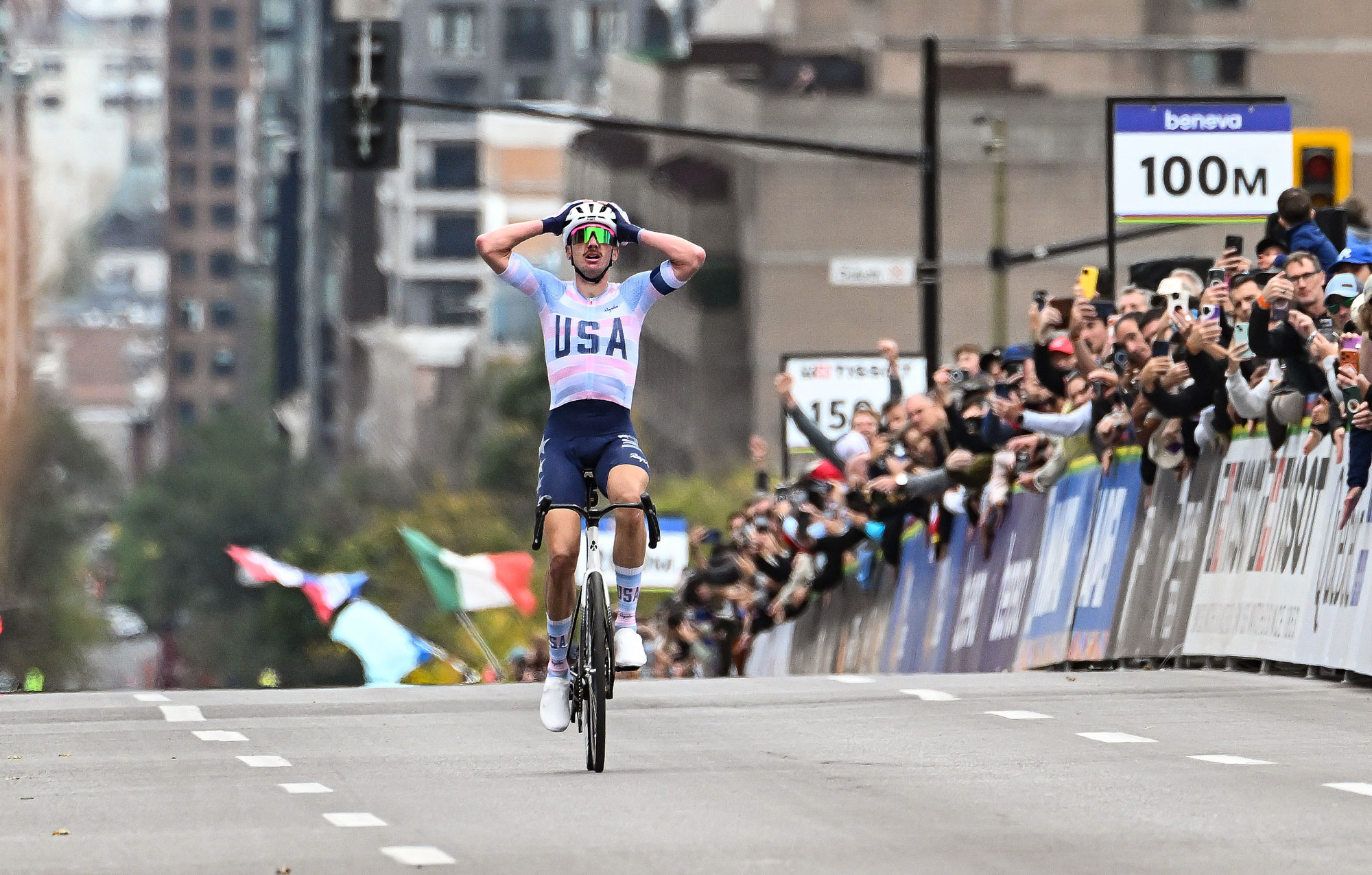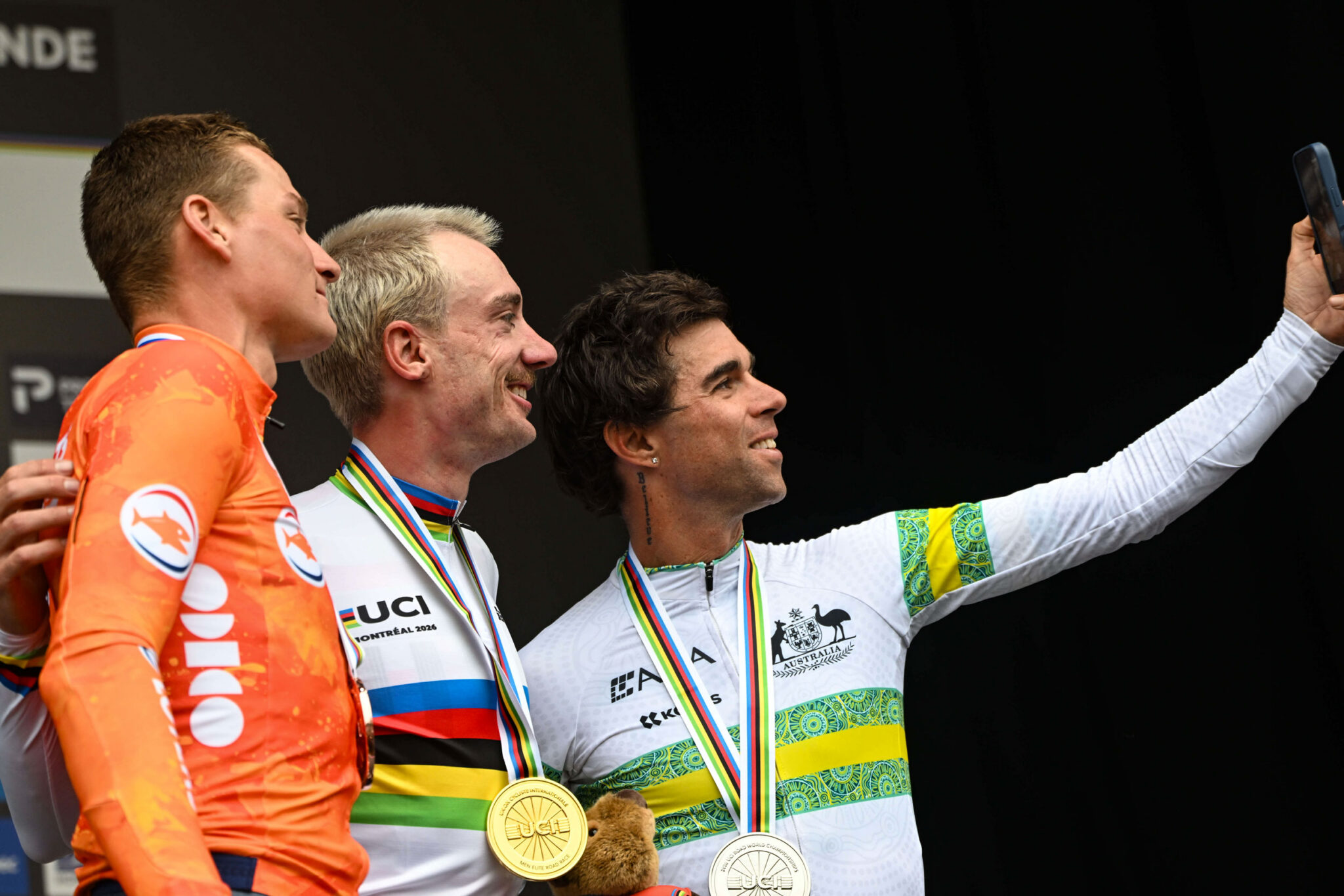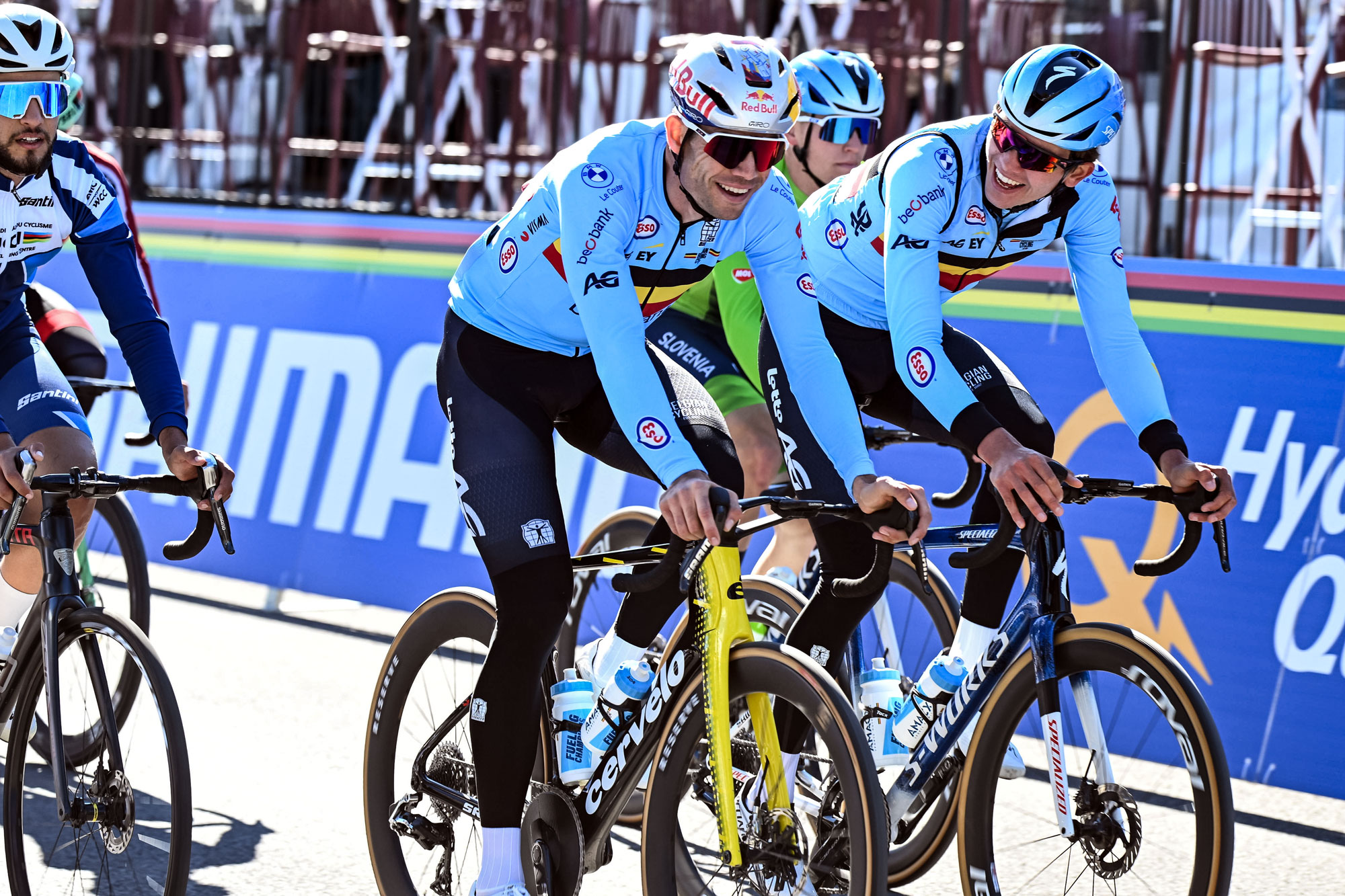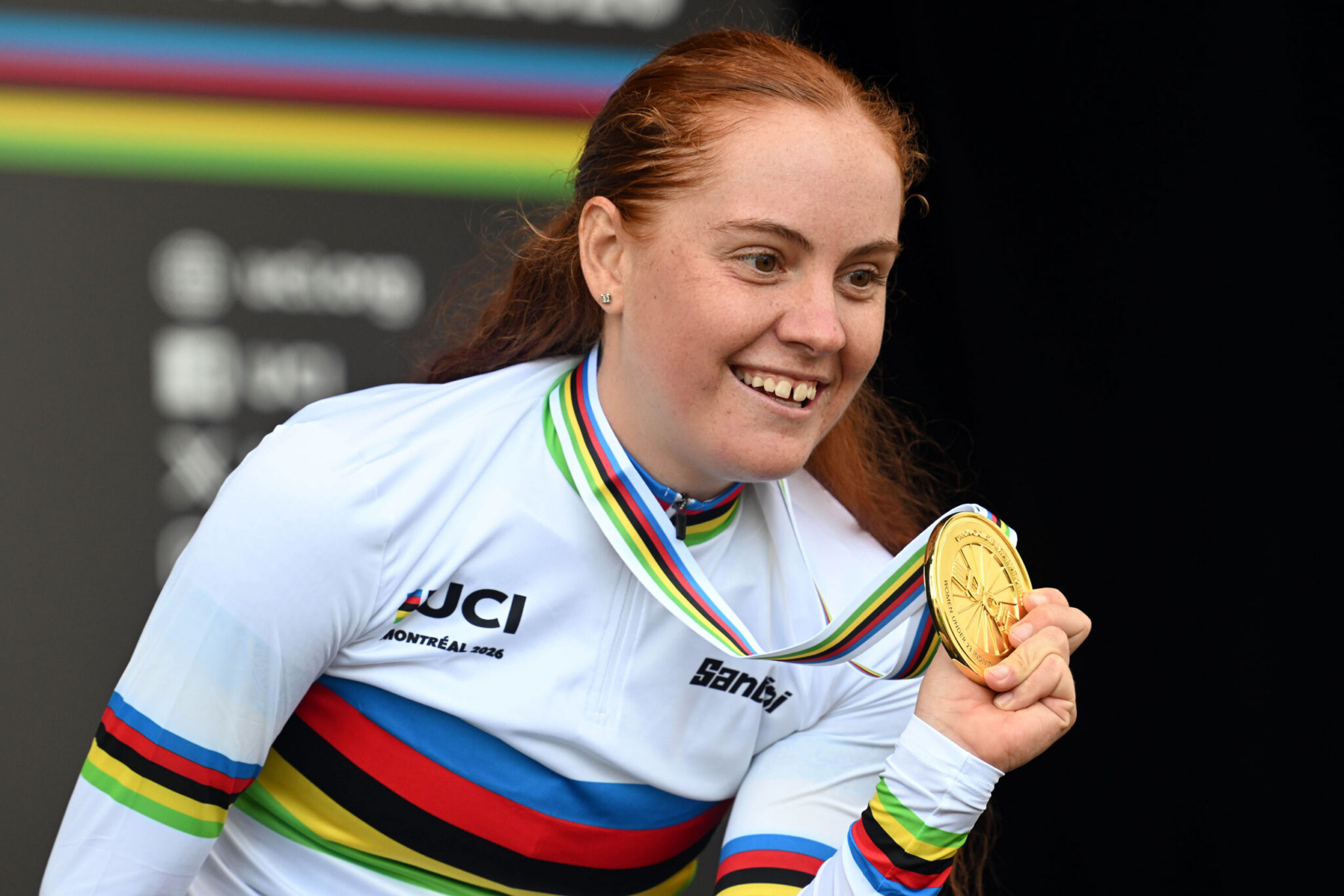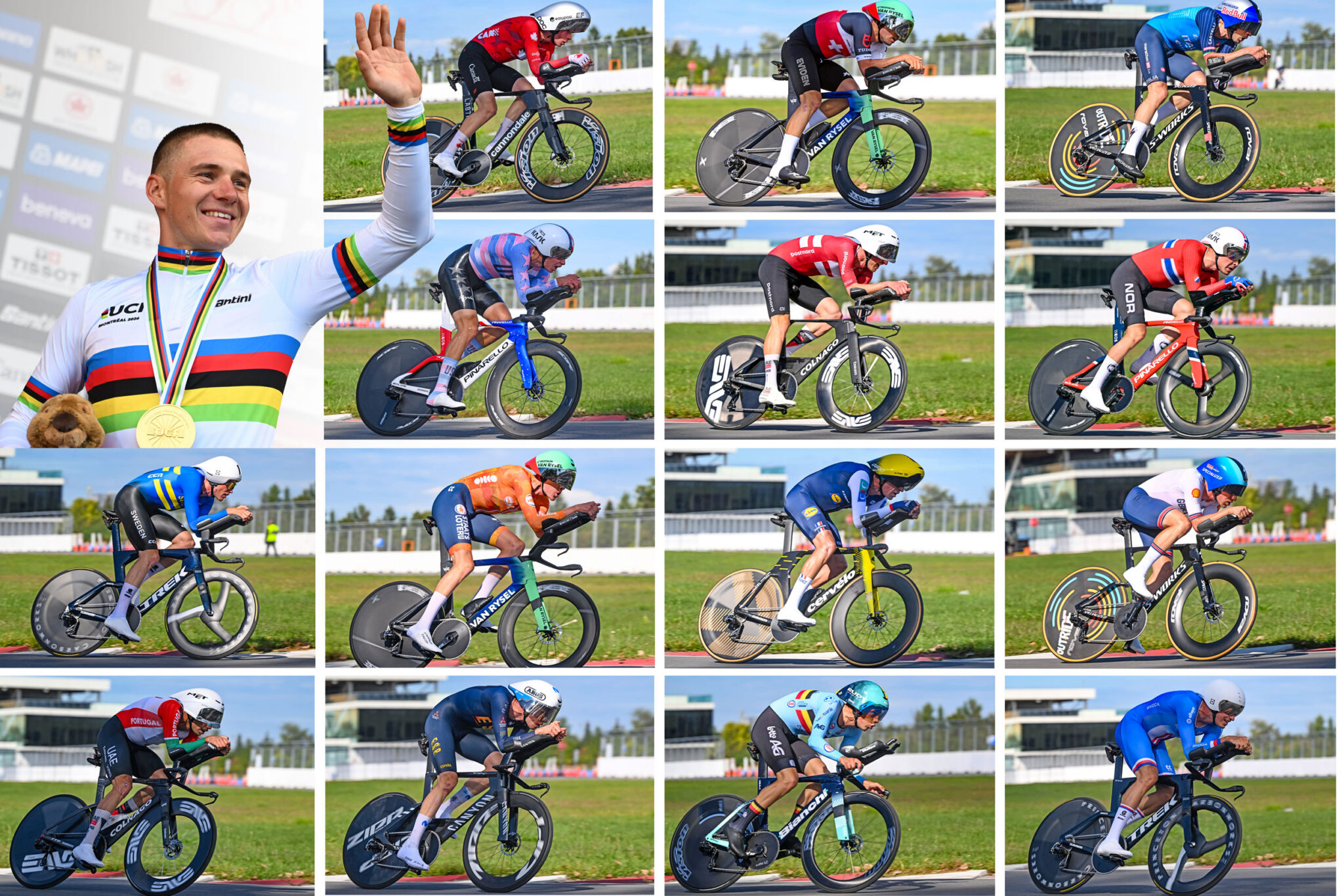
On Sunday in Montreal, Remco Evenepoel became the first in history to win the time trial rainbow jersey four times in a row, making him the ultimate heir to the legends of the discipline.
– By Luc Herincx (L’Equipe)
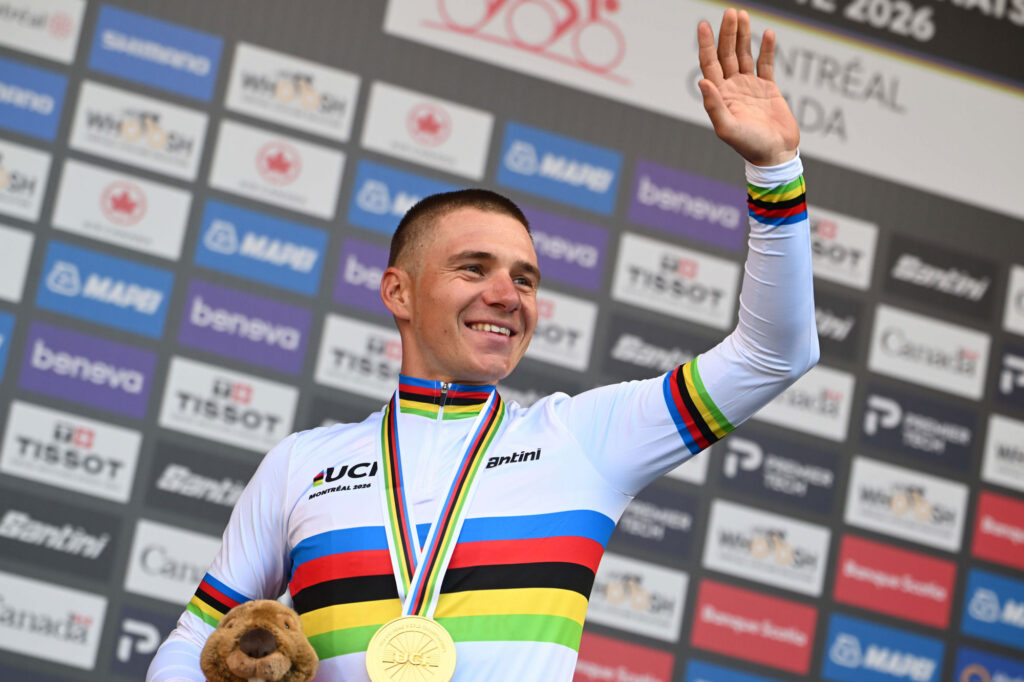
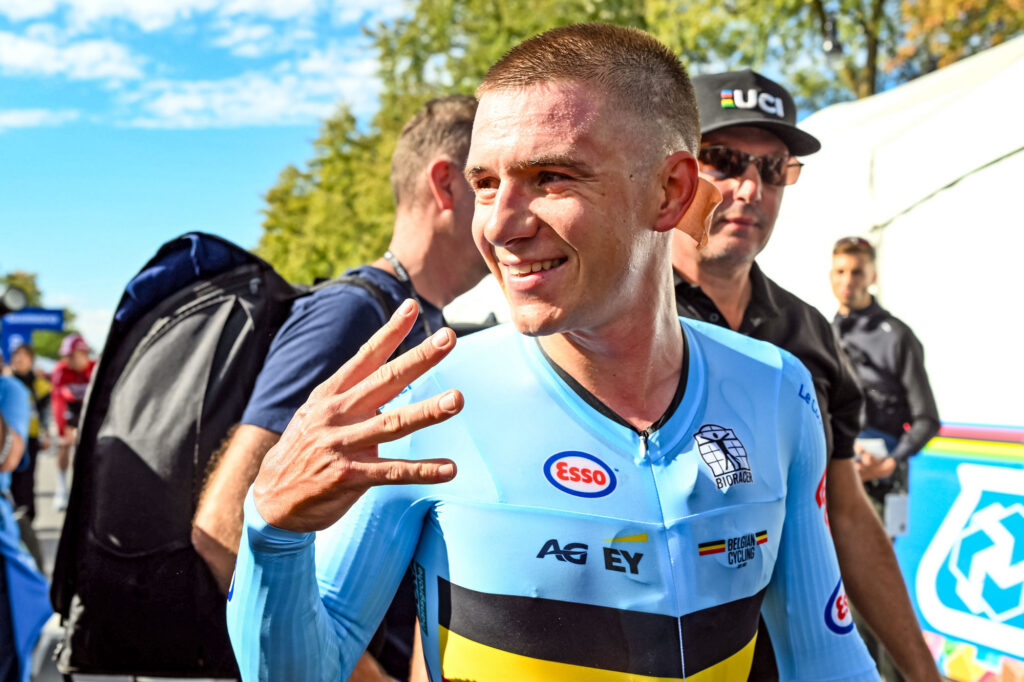
To the epic sound of the Sunday evening djembe players in Parc du Mont-Royal, above the city of Montreal, Remco Evenepoel raised an imaginary telescope to his eye, looking “towards the future” – as he put it philosophically – then held up four fingers with his hand. What other rider can afford to string together celebrations on the finish line of a time trial?
“I saw on the big screen that I had a lead,” explained the 26-year-old Belgian, after winning by a huge margin, 57 seconds ahead the Italian TT wizard Filippo Ganna – twice the world champion in this discipline, in 2020 and 2021, but second to Evenepoel again in 2026 just as it was in 2023 and 2024.
Already the Olympic champion in this discipline – as well as being a double European champion (2019 and 2024) and two-time Belgian champion (2022 and 2025), the Brabant native is the third rider to collect four rainbow jerseys for the TT. He has now matched two other time trial maestros, Fabian Cancellara (2006, 2007, 2009, 2010) and Tony Martin (2011, 2012, 2013, 2016). Unlike the Swiss and the German, however, Evenepoel is the first to win his world titles consecutively.
Evenepoel and other ‘chono’ masters
“We have to give Remco his due,” said the 19-year-old bronze medallist Paul Seixas, “he is perhaps one of the greatest specialists of all time.” It should, however, be pointed out that the event has only existed since 1994 and that its former equivalent, the Grand Prix des Nations, was won nine times by Jacques Anquetil, including six in a row (from 1953 to 1958). The discipline then enjoyed far greater popularity, which encouraged the best riders in the world to commit to it, as they had no choice but to go through it to win the cycling’s biggest contest each year, the Tour de France. During Anquetil’s time the French Grand Tour could feature up to four or even five time trials per edition.
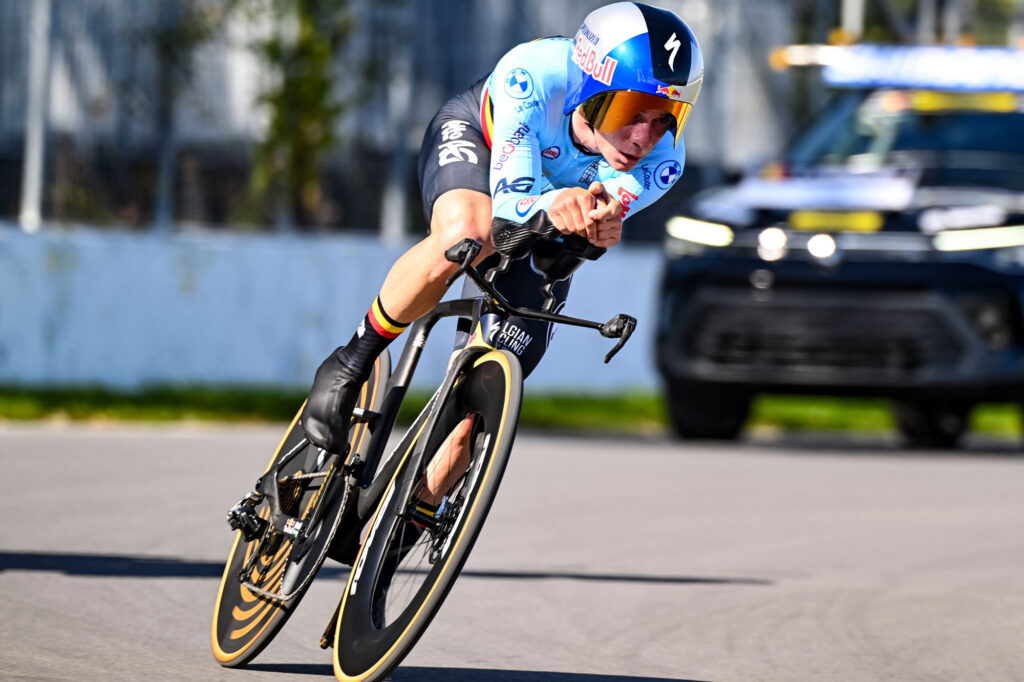
“Evenepoel is one of the best, he is very well set on his bike,” said Dutchman Joop Zoetemelk after the blistering ride by the Belgian in Canada, “but it’s hard to compare, each has his own era.”
The time trial world championship, first won by former individual pursuit world and Olympic champion, Chris Boardman in Sicily 32 years ago, has become a showcase of a very particular cycling discipline. The Brit is one of five riders to have both won a TT world title and held the prestigious Hour Record at one point of his career (56.375km, riding in the since-banned ‘Superman’ position in 1996).
The other four are Miguel Indurain – world champion in 1995, Hour Record (53.040km) in 1994; Bradley Wiggins – 2014 and 2015 (54.526km), respectively; Rohan Dennis – world champion in 2018 and 2019, Hour Record (52.491km) in 2015; and Filippo Ganna – world champion 2020 and 2021, and the current Hour Record holder (56.792km set in 2022).
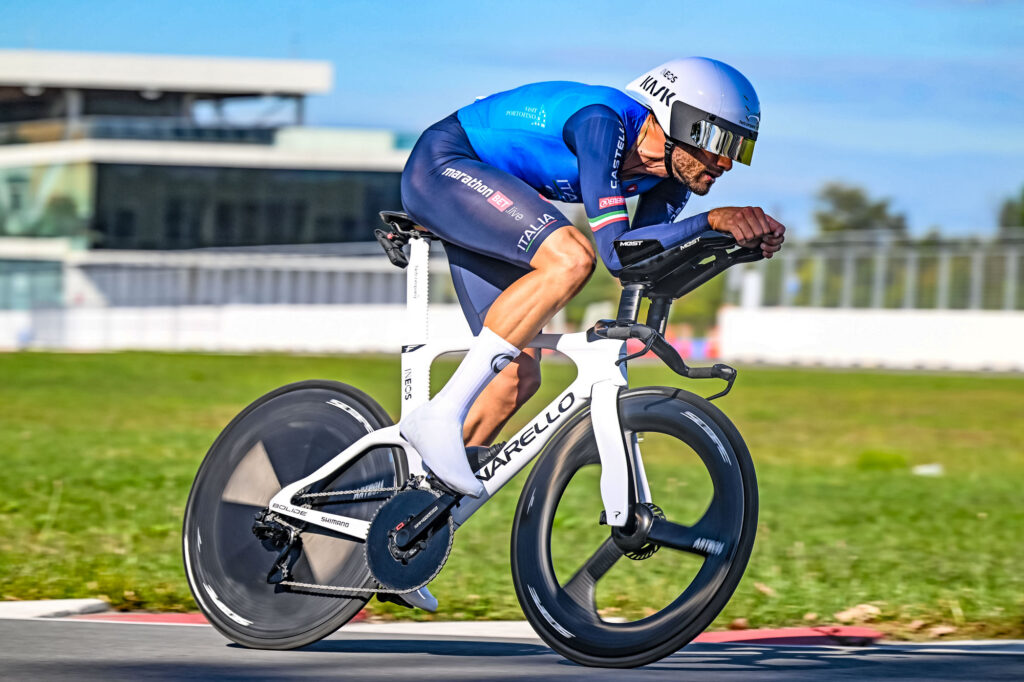
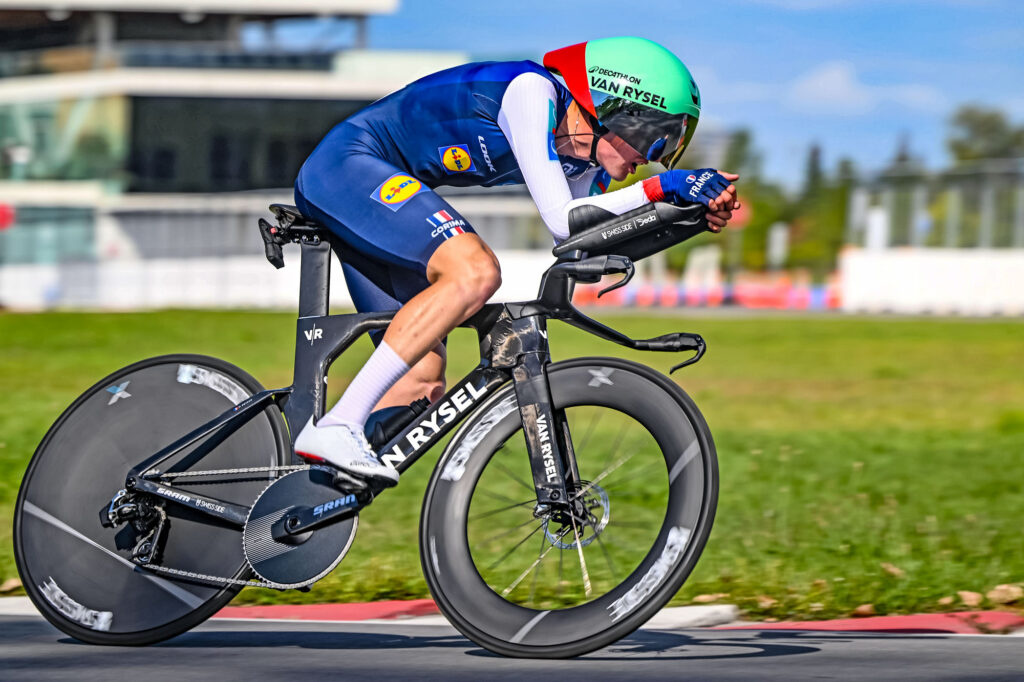
Evenepoel has won many of road cycling’s biggest prizes – including the 2022 road race world championship, and GC at the Vuelta a España (2022) – but he is yet to tackle the Hour Record… but surely that time will come.
Meanwhile, Anquetil set himself the task of breaking the hour record, and he achieved this for the first time in 1956 (46.159km, on 29 June, a week before the Tour de France… in a year the Frenchman did not start Le Tour). ‘Maître Jacques’ broke the Hour Record again in 1967… but it was never ratified as he refused the post-ride doping control.
This refusal late in Anquetil’s career was, evidently, a sign of the times. Records may have been set but plenty were achieved with dubious means, others we set in riding positions that have since been banned. But it’s a discipline that inevitably sees the cream rise to the top.
Eddy Merckx then set a new Hour Record benchmark in 1972 (49.431km) and that stood for 28 years, until Chris Boardman’s innovative position reignited interest in the challenge presented by this cruel solo time trial in a velodrome.
In the time trial pantheon another Frenchman, Bernard Hinault, enjoyed a period of halcyon form winning the Grand Prix des Nations five times and of holding the best win ratio in individual Tour de France time trials (64.5%, with 20 victories in 31 ITTs, compared with 60% with three wins in five ITTs for Evenepoel). Miguel Indurain later impressed with the margin he could open up on his contemporaries, capable of finishing three minutes ahead of the runner-up as was famously the case in the epic 65km stage nine TT of the 1992 Tour.
“We didn’t race with the same equipment,” says Zoetemelk, another prolific time trialist from a bygone era.
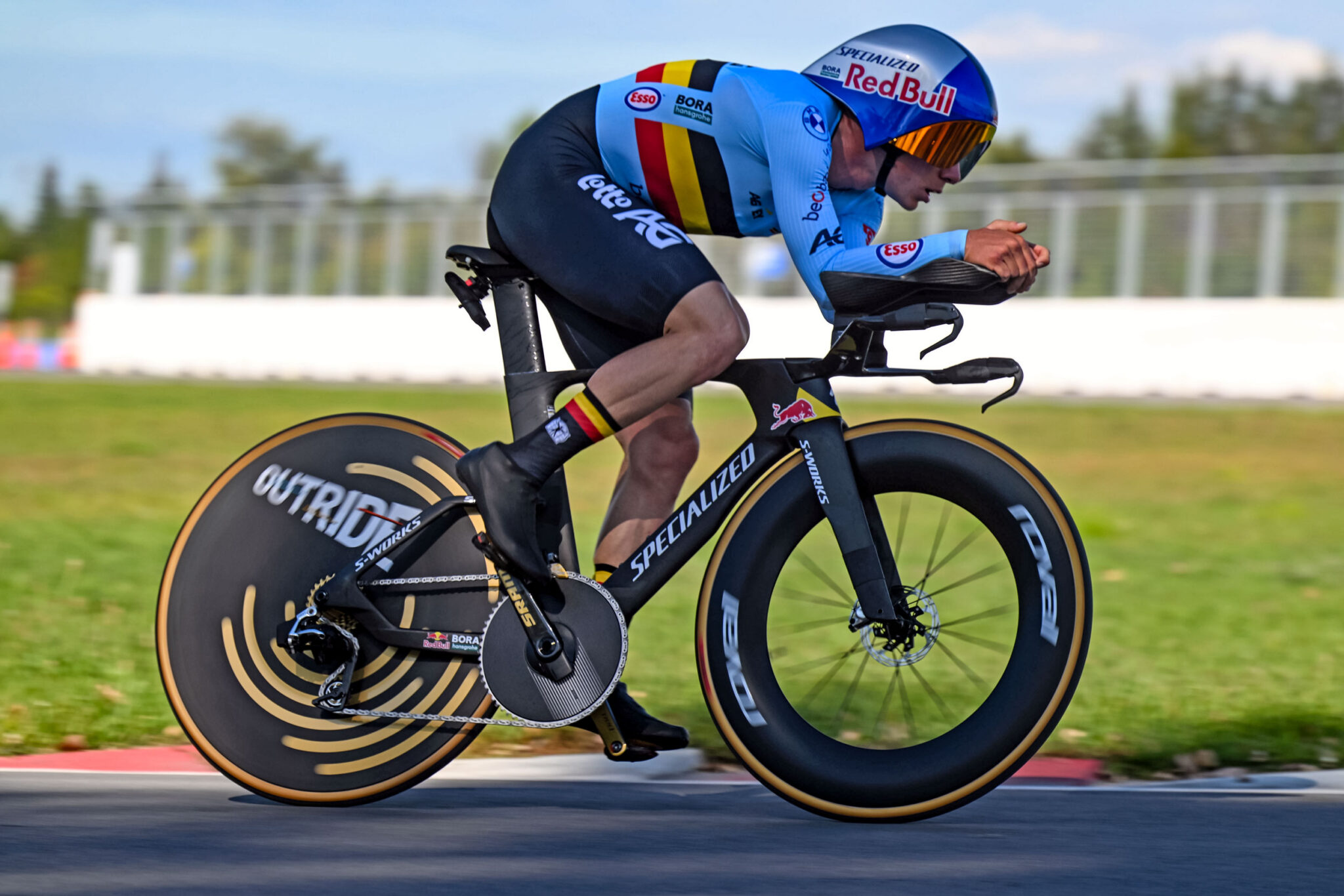
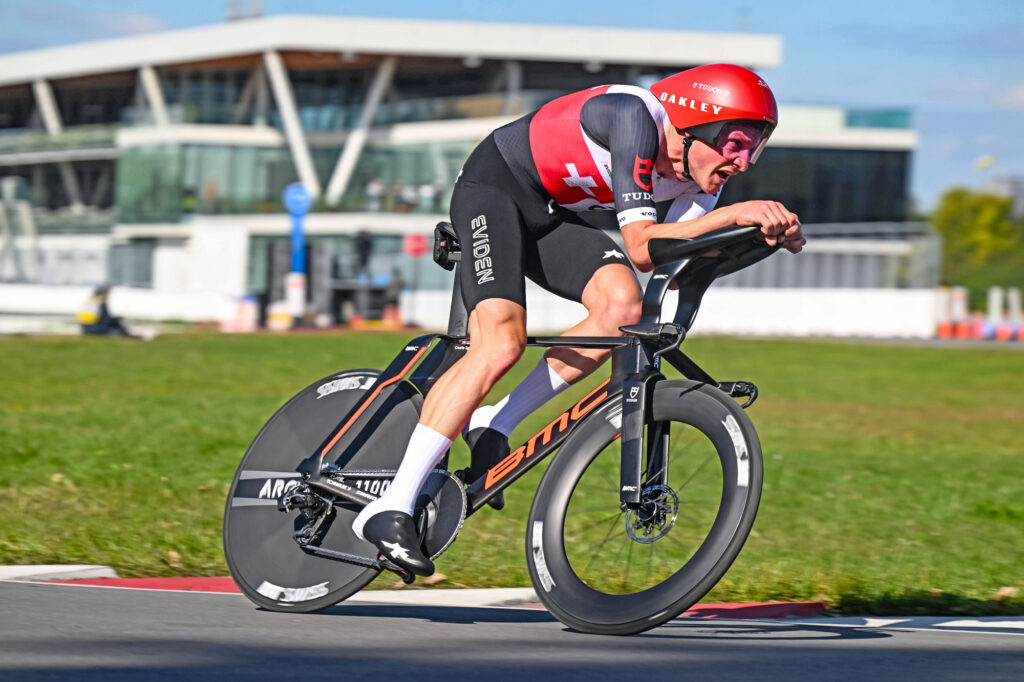
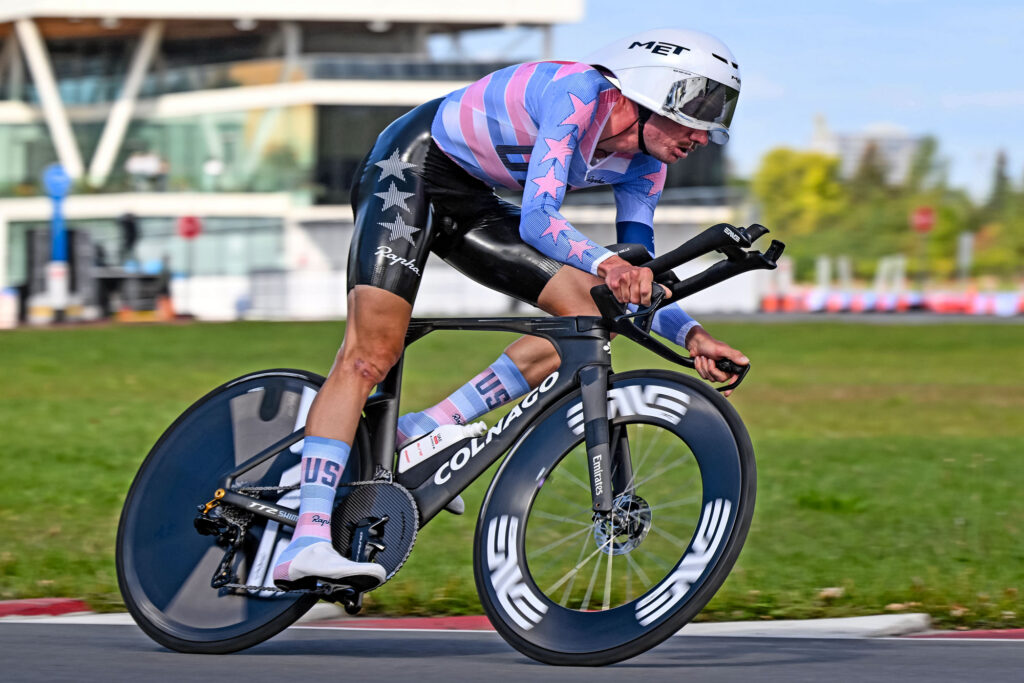
“Riders like Bernard (Hinault) and Eddy (Merckx) left their mark on the discipline without having this kind of gear.” Outdone in raw numbers by those two – who are the most complete riders in history, much more than just specialists against the clock – Evenepoel stands out for having shaken up the discipline. The four-time world champion from Belgium has a unique position admired as much for its effectiveness as for its aesthetics. He’s a picture of perfection on the TT bike!
All those years ago Anquetil had already ushered in a historic break by understanding that time trialling was not just a question of power, spending hours training to hold his “egg” position – inspired by skiing – behind a derny. “History will remember two eras,” wrote cycling historian, the late-Jacques Augendre, “before and after Anquetil. Before him, everything was improvised. Afterwards – and thanks to him – the discipline started to evolve.”
What now for Evenepoel?
In his meticulousness, Jacques Anquetil himself was the heir to Antonin Magne, the first winner of a Tour de France time trial (stage 21b, a 90km test from La Roche-sur-Yon to Nantes in 1934). Evenepoel is the latest in that line. The Belgian’s revolution has been to impose a new body type at the top of time trial honour rolls: a just under 171cm tall and with a race weight of around 62kg he is the antithesis of past masters of the discipline. The Belgian’s compact thighs, short torso and short arms have become an advantage in the paradigm of scientific time trialling and aerodynamic expertise.
The first world time trial champion shorter than 179cm since Santiago Botero (175cm) in 2002 and under 69kg since Laurent Jalabert (67kg) in 1997, Evenepoel is a UFO in the discipline, who will either go down as such or, on the contrary, will have inspired an entire generation of rouleurs with a similar profile. Whatever comes next in this ever-evolving discipline of cycling, the four-time world champion is in the process of leaving a considerable legacy.
To rise even higher among the best rouleurs, the Belgian will have to become the first to win five world titles. Why not as soon as next year when the championships return to the French Alps with the TT course set around the stunning Lake Annecy? And, at some point, the discussion about taking on the Hour Record will be difficult to ignore. It’s a challenge thrown down to him by Eddy Merckx in 2024 and one Evenepoel is motivated to take up.
“One day, I’ll be able to try,” he says of the Hour Record. “I think I have the qualities for it.” While refusing, however, to be confined to his speciality, still driven as he is by the pursuit of another Grand Tour victory… and, of course, the quest for a second road race world title. The Belgian now waits less than a week for that opportunity. He’s already been on the podium in Montreal, crowned champion again. And next Sunday? He will strive to back up for a second gold medal in 2026.
– By Luc Herincx (L’Equipe)
– For results, visit the official site of the 2026 world championships in Montreal. –