Street fight, suspense and surprise winner in Montreal
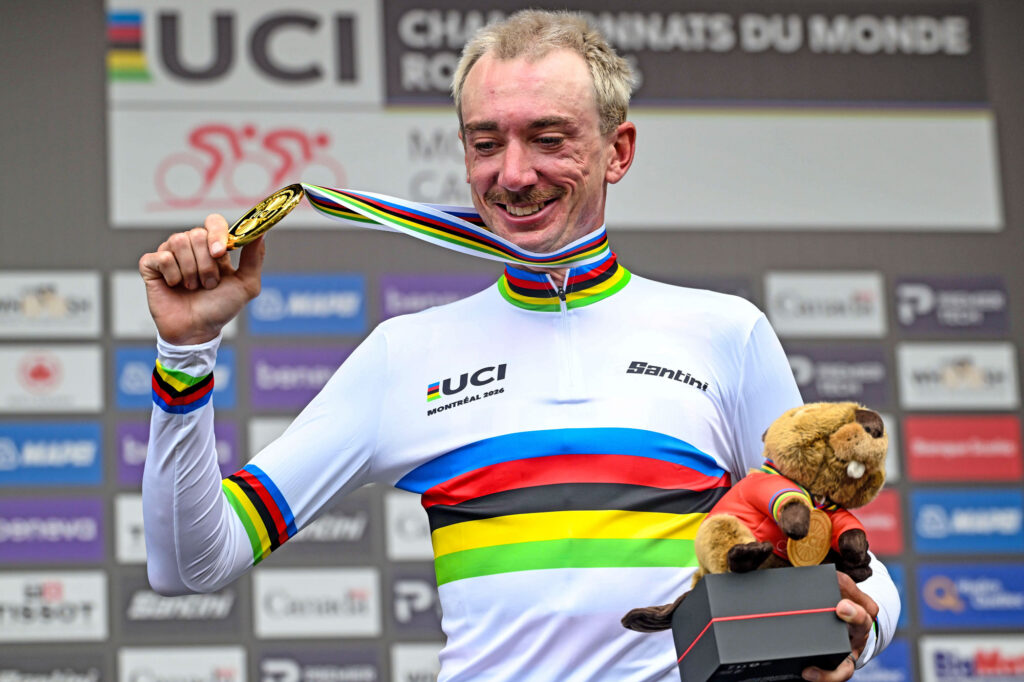
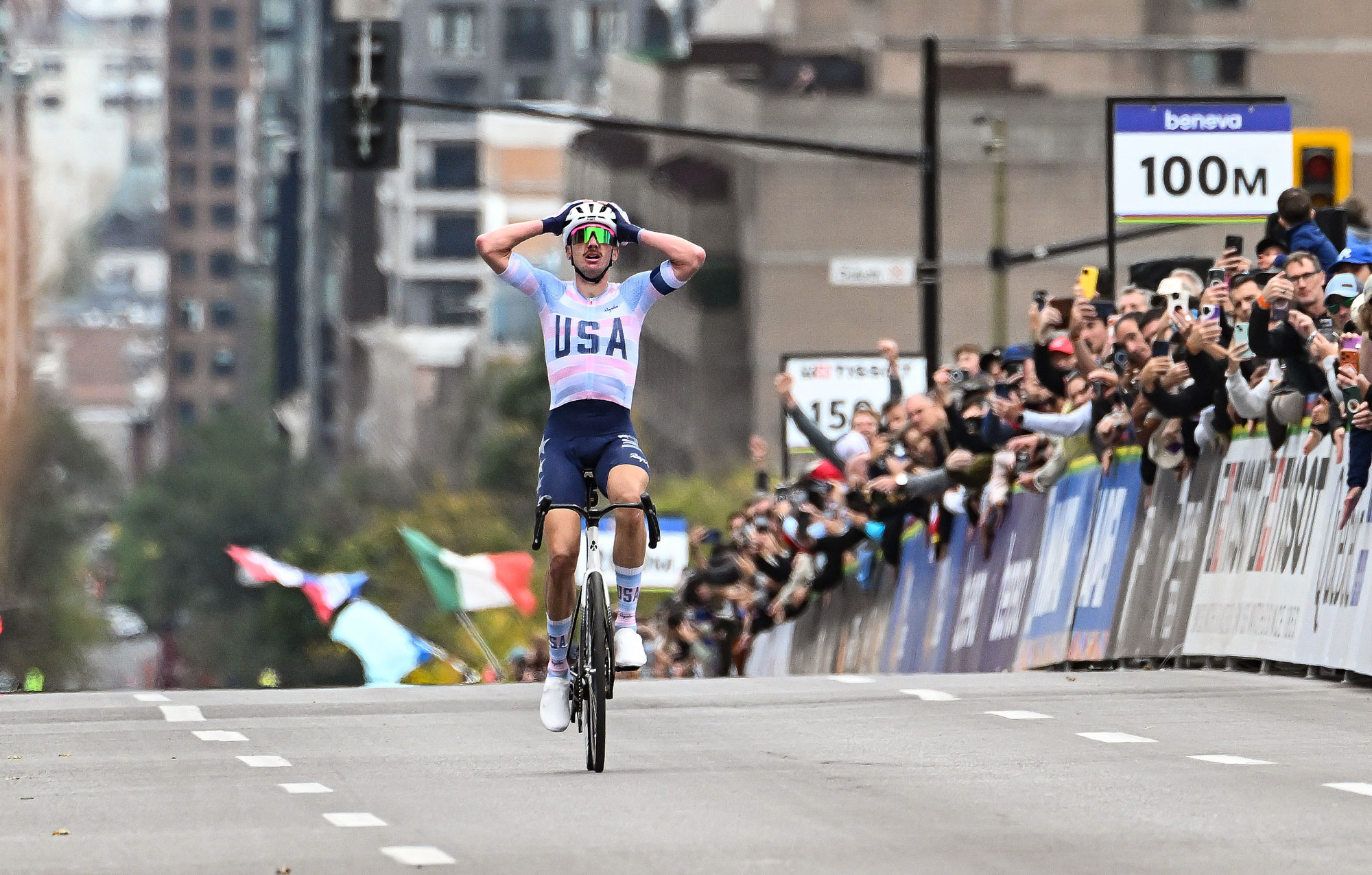
Most of those who were expected to excel in the final event of the 2026 world championships in Montreal showed themselves during the 273.4km race on Sunday 27 September… and while Brandon McNulty of the strong and cohesive American team was not considered one of the favourites, he proved that he had what it takes to win one of cycling’s most prestigious one-day races.
Brandon McNulty caused an upset and won a completely crazy world championship. The final race in Montreal was a fierce, non-stop scrap in which the favourites Remco Evenepoel, Isaac Del Toro and Paul Seixas ended up burning their wings.
– By Alexandre Roos | L’Equipe
(Photography by Stefano Sirotti)
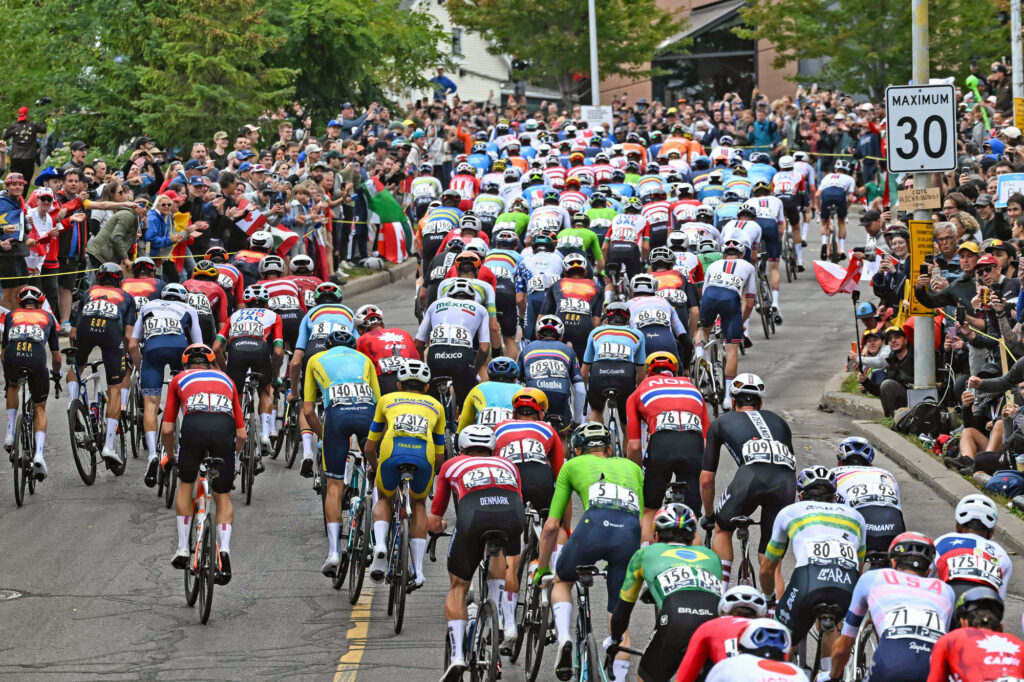
The elite men’s road race wore us out. It was a contest that frayed our nerves just to watch the stars of pro cycling fight each other – and themselves – pushing right to the bottom of the tank, exploring their physical and mental limits, probing the boundaries of their perseverance and tenacity. This race was like no other, more like unleashing a pack of street dogs on a circuit where they would just keep trading blows without ever stopping, until there was only one left standing.
It had to be bonkers and off the wall right to the end for that last man to be the unexpected Brandon McNulty.
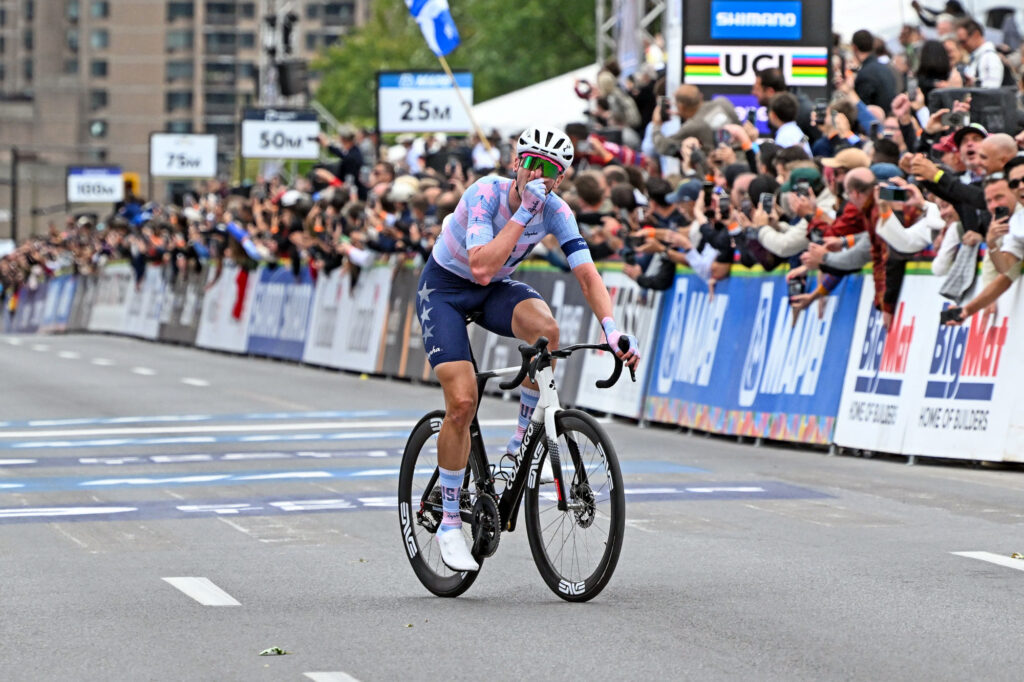
The new world champion, the heir to the rainbow jersey so well represented by Tadej Pogacar, is more used to playing the domestique at UAE Team Emirates than shining for himself. But the 28-year-old from Phoenix, Arizona excelled when given the rare chance to race for victory. It’s like the ultimate cheeky wink from Pogacar, the most notable absentee from this year’s championships, who this time won by proxy.
Beyond the exploits of the champion there were myriad other tales from a day of mayhem on the streets of Montreal.
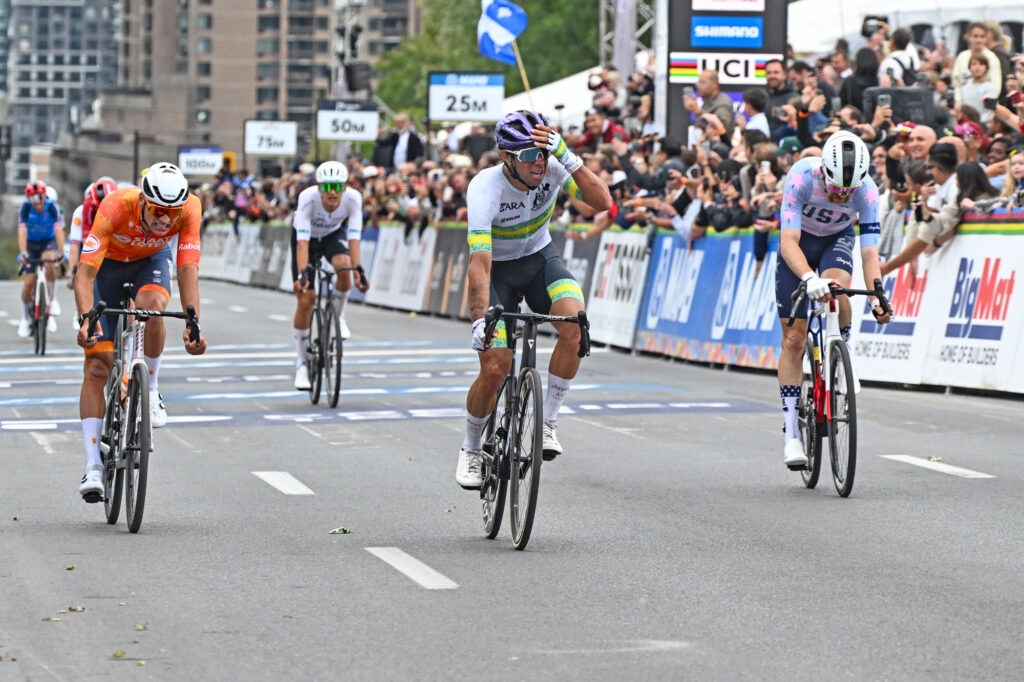
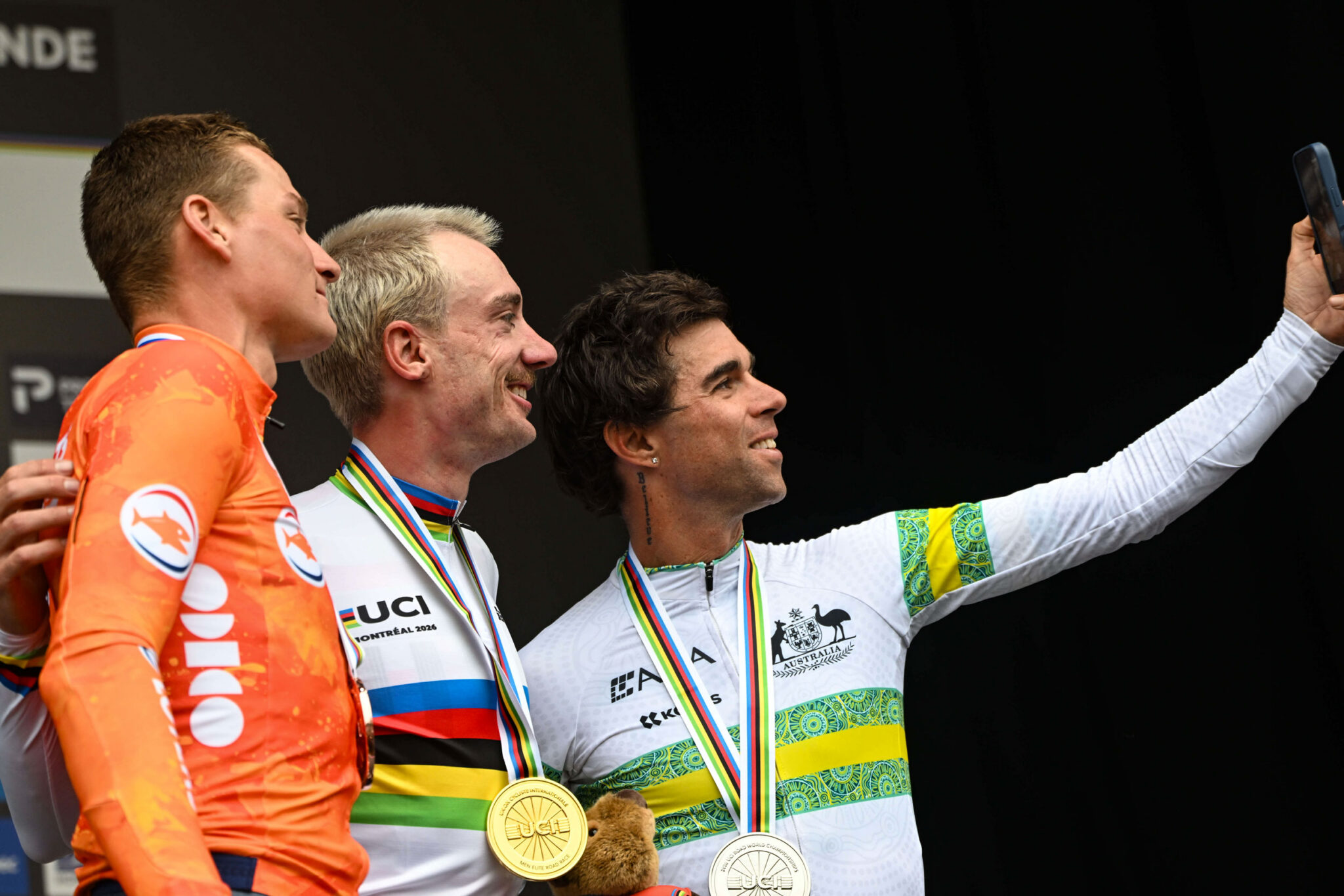
What can we say about the Australian world championship maestro Michael Matthews who seemingly rose from the dead – both in his career and in this race – and managed to slip into the chase group with the favourites? Once he found himself in elite company, he remained there, steadfast and determined as he’s been since that formidable victory in Geelong all those years ago when he was still an Espoir. He has been knocked down over the years but on Sunday, when he was in a position to challenge for the win, he never budged from it despite the difficulty of the course.
Only Mathieu van der Poel and his third place brought a hint of ‘normality’ to this whole mess that had left all riders in ruins. The Dutchman was one of the main agents of chaos in this showcase of racing that the radio-free worlds provides. Communication differs and it changes the dynamic. Further conundrums are added when typical team allegiances are tossed aside and national duty is the order of the day.
The wild nature of the street fight in Montreal ended up being curiously similar to the madness the race for the rainbow jersey in Glasgow in 2023, when MVDP’s power resulted in gold before Pogacar’s two-year reign began.
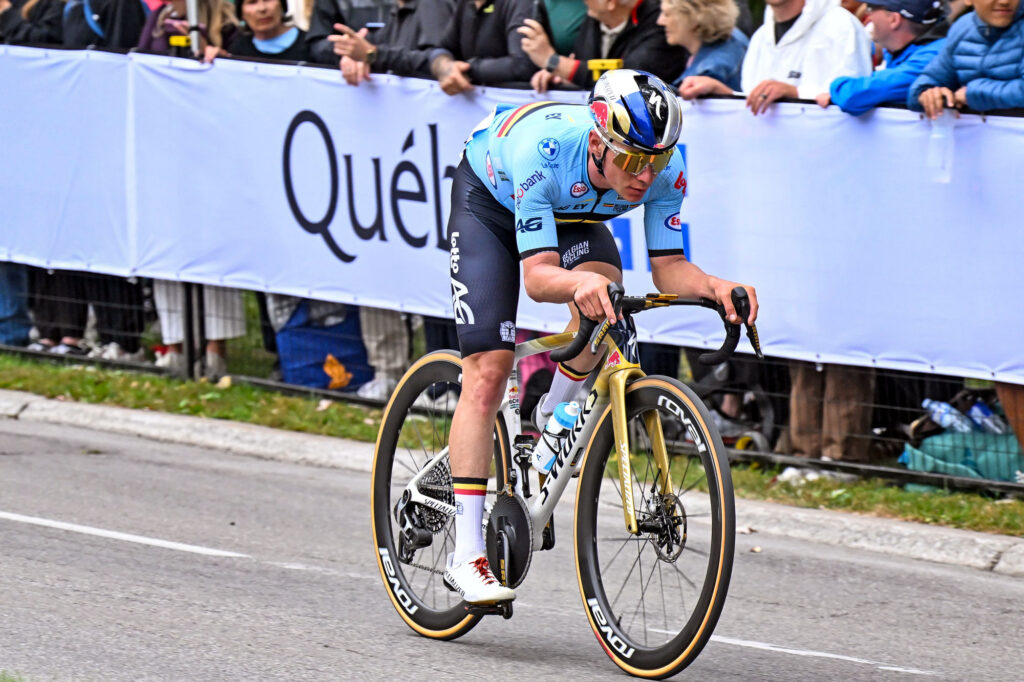
Mathieu van der Poel, the bronze medallist in Canada, is the ultimate competitor, made for circuit racing – on the road or in cyclocross – and he was guided by an innate tactical sense. MVDP was daring early, willing to stick his nose out on Sunday, try his luck and then remain in contention at the moments when it mattered most. And, as we have come to expect from this halcyon period of modern cycling, when the Dutchman is firing his regular nemesis from Belgium, Wout van Aert, is also a factor.
It was Wout van Aert who lit the first serious fuse with less than 90km to go, MVDP reacted within a second. He would attack himself on the next lap, less than 15km further on in the 273.4km slug-fest. And, for a moment there, it seemed like the distinct orange kit of the Dutch national team would again be replaced with a white jersey and rainbow stripes. He surged with that mix of brutality and finesse that has come to define his career. And in Montreal on Sunday he did it to keep the lead group alive, because he knew he had to stay at the front as long as possible rather than wait for the best climbers to crucify him on the Côte Camillien-Houde in the final laps.
Van der Poel went clear with one of the omnipresent forces of the modern peloton, Quinn Simmons and Oscar Onley, before Primoz Roglic joined them. For several laps, it seemed possible that this would be the winning combination. The quartet would survive nearly 40km at the head of the race but that didn’t ensure they would be racing for the medals. Several laps of the circuit in Montreal remained.
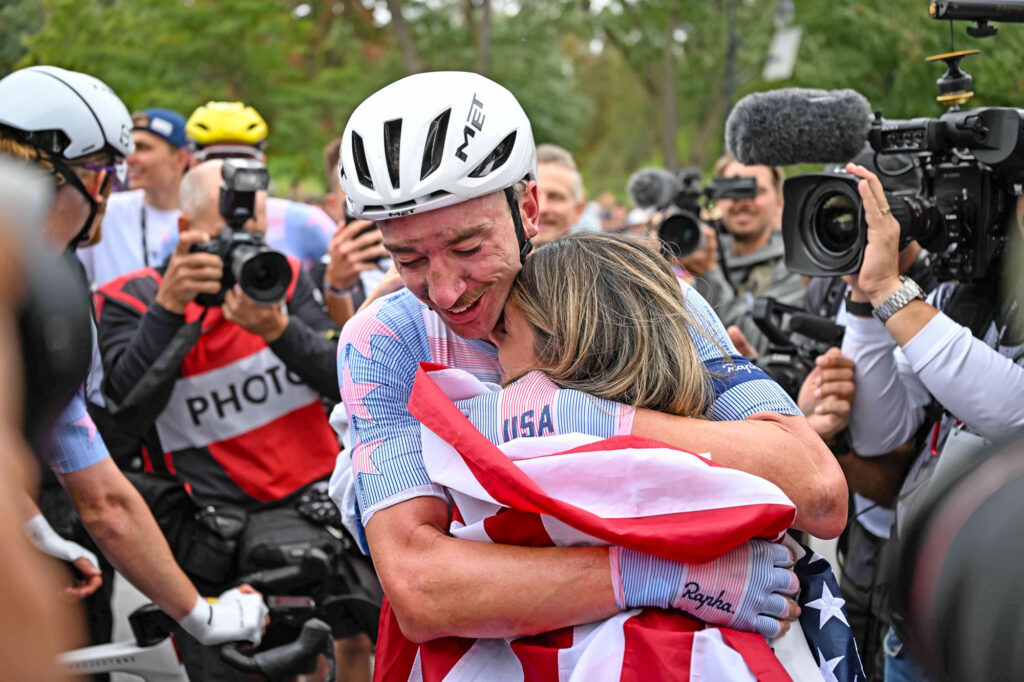
McNulty: “Sometimes miracles happen”
This phase at the heart of the race would drown the strongest line-ups, those of Belgium and France. Van der Poel himself had dropped Van Aert when he accelerated, an old habit. And behind, Remco Evenepoel seemed to be running on alternating current; in any case, he was nowhere near as imperial as imagined.
The two Belgian leaders were floating between different groups, and both were on the rev limiter.
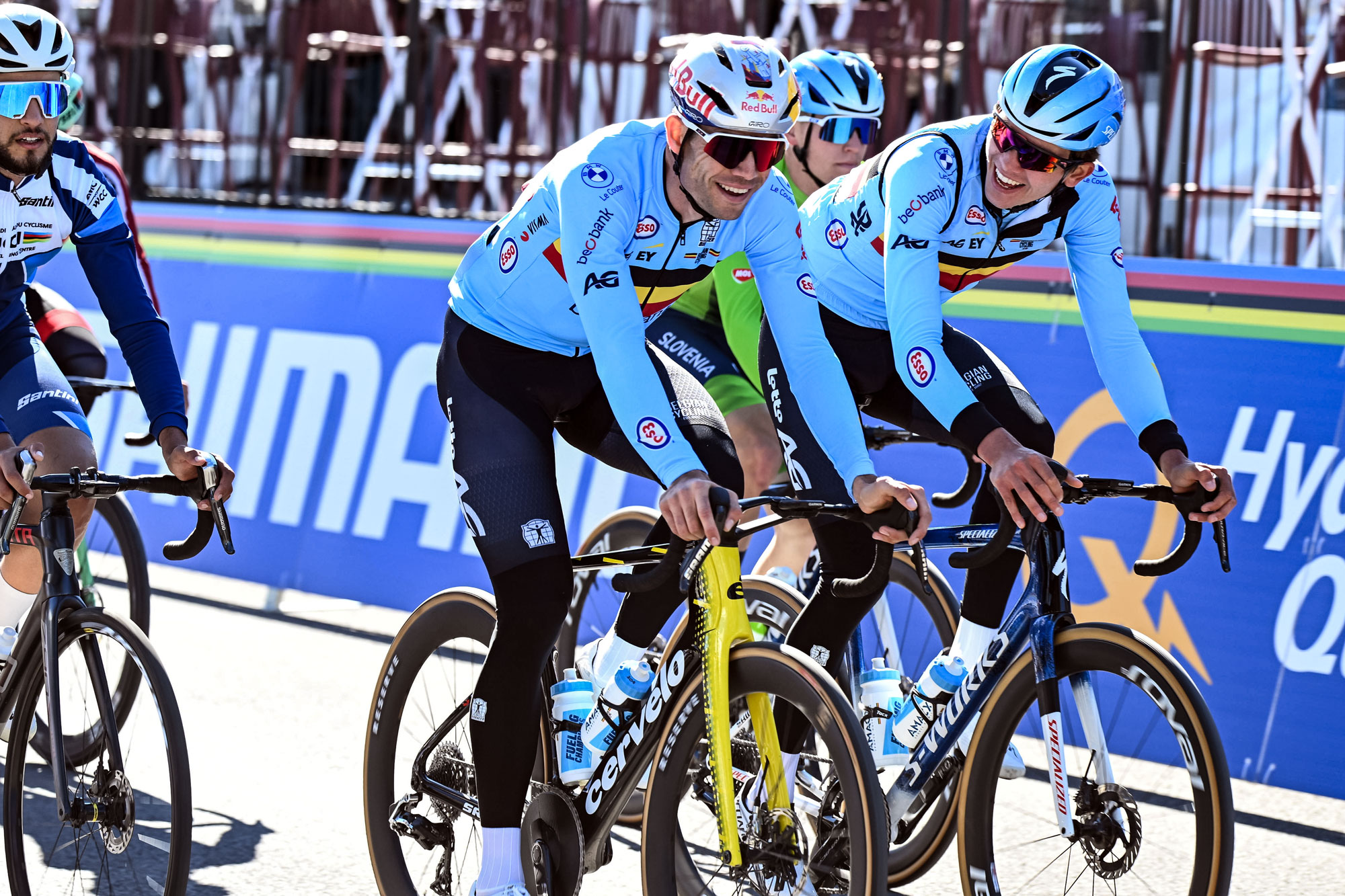
Remco and Wout never seemed to be in sync with each other and although they would try to save the race for their motherland, they were unable to really work together. Evenepoel jumped and put himself back in winning contention several times, but he never had the winning cards in his hands in the road race of this year’s championships.
The French were also swallowed up in the final hour, the key phase of the race. They had been the first demolition men at these worlds, the ones who had set a mad tempo and turned the race into a scene akin to a classic western, with bullets flying on every street corner. As soon as they hit the circuit for the first of 12 laps, 167km from the finish, Bruno Armirail took the controls and his turn of pace at the head of the peloton would last for 60 kilometres! The rouleur set a hellish pace, the effort contorting his face, forcing him to take deep breaths, and everyone behind was suffering.
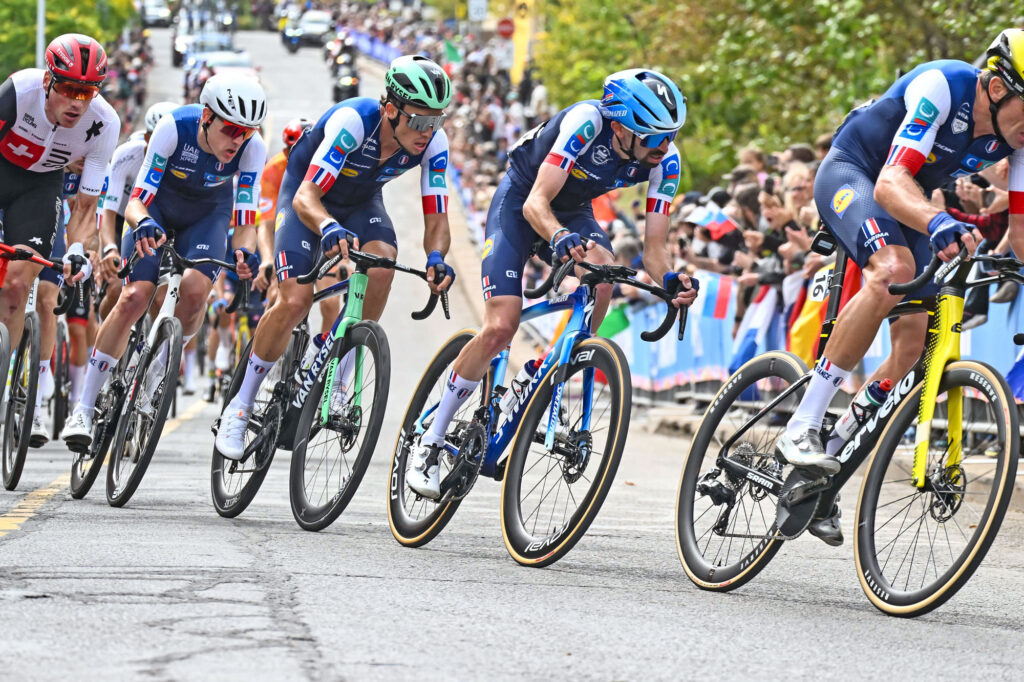
Once his shift was over, other fireworks specialists came on stage – Valentin Paret-Peintre, Jordan Jegat, Pavel Sivakov, Alex Baudin – but when the flahutes started to get excited, not a single French rider managed to slip away with them. Thomas Voeckler’s men had, in a way, trapped themselves and were victims of the crazy train they had created, because in the ferocious chase that formed behind MVDP and his accomplices, Seixas found himself isolated.
To be fair, that was the case for almost all the other favourites except the Americans who were keeping their heads above water, and that numerical advantage tipped the worlds.
Up front with Van der Poel, Simmons had relieved his team-mates of any responsibility in the chase. When they were caught, 34km from the line, Matteo Jorgenson and Brandon McNulty had not really turned a pedal in anger. The former launched an acceleration, then the Arizona Locomotive took advantage of the lull created by the regrouping to slip away like a postman on a flat, transitional section. The small advantage created by McNulty would soon become a surprisingly large one, stretching to around a minute with two laps to race.
Behind the American, Paul Seixas and Isaac Del Toro could not find an agreement. A cohesive effort was required in the chase group but by this point of the race the only team with the benefit of numbers was the USA. The others – Tom Pidcock, Giulio Ciccone, Michael Matthews – would not or could not cooperate.
Seixas cut down by cramp
Del Toro and Seixas long looked the strongest of the chasing troupe, but the Mexican, who had worked so hard, chewing through an endless number of gaps, strangely faded just as McNulty rode off. The winner of the GP Montreal only a week earlier, we had no way of knowing whether Del Toro did not want to chase his UAE team-mate or whether, like the others, he was simply cooked.
As for the Frenchman who turned 20 on the Thursday of the worlds, he was very good tactically and was manoeuvring very well, modelling his race on Del Toro’s. Just as it was in the finale of their debut showing in the Tour de France earlier this year, Seixas was following Del Toro everywhere, watchful, mindful, and never overdoing it… but on that final climb of the circuit, one that might have provided the launch pad for the winning move, his legs gave way, cut down by cramp and what he immediately analysed as a mistake in his food or hydration.
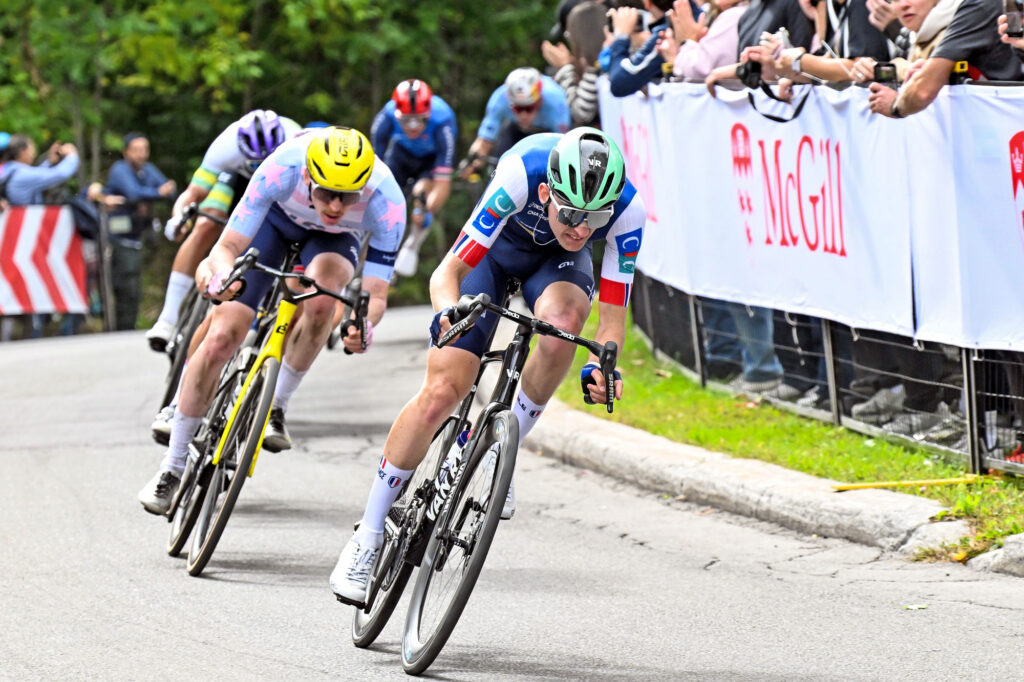
All the toughest racers cracked in this finale where they had nothing left but willpower to move forward: the irrepressible Irish representative, last year’s bronze medallist Ben Healy, Pidcock, Simmons… they were, present but uncapable of stopping McNulty’s parade. They were yo-yoing between groups and we even saw that indestructible Danish yeti Mads Pedersen appear in this chase group, apparently emerging near the front out of nowhere.
Even with the firepower of multiple superstars in the chase no one was able to bring back the American rouleur, who was managing his effort between the climbs and the undulating portions of the city circuit. Meanwhile, behind, Pidcock and Ciccone looked the least decrepit, accelerating when they could on the hills. But they gave the impression of pedalling in thin air, of not moving forward anymore, when they were not just staring at each other.
After the last passage on Camillien-Houde, they could see the American, just about 10 seconds ahead of them, but they no longer had enough strength and could not reach an agreement. Brandon McNulty would never be caught. He went on to win this zombie race alone and claim the rainbow jersey at the end of a wonderfully mad world championship.
– By Alexandre Roos (L’Equipe)