By Luc Herincx (L’Equipe)
With 22 race wins during the 2026 season – a tally that includes three of cycling’s five one-day ‘Monuments’ as well as his record-equalling fifth Tour de France title – Tadej Pogačar was expected to surpass his record of 25 victories from 2024. Even before he lined up for his second appearance in the Vuelta a España, this year has already seen him achieve an unprecedented list of conquests.
Had all gone according to the schedule mapped out by UAE Team Emirates-XRG, the Slovenian superstar would have ended the Vuelta with more race wins that in 2024. And, judging by his domination of competition this year, a third successive world championship victory was also a realistic proposition… but the forecast for the latter portion of Pogačar’s 2026 season has now been erased.
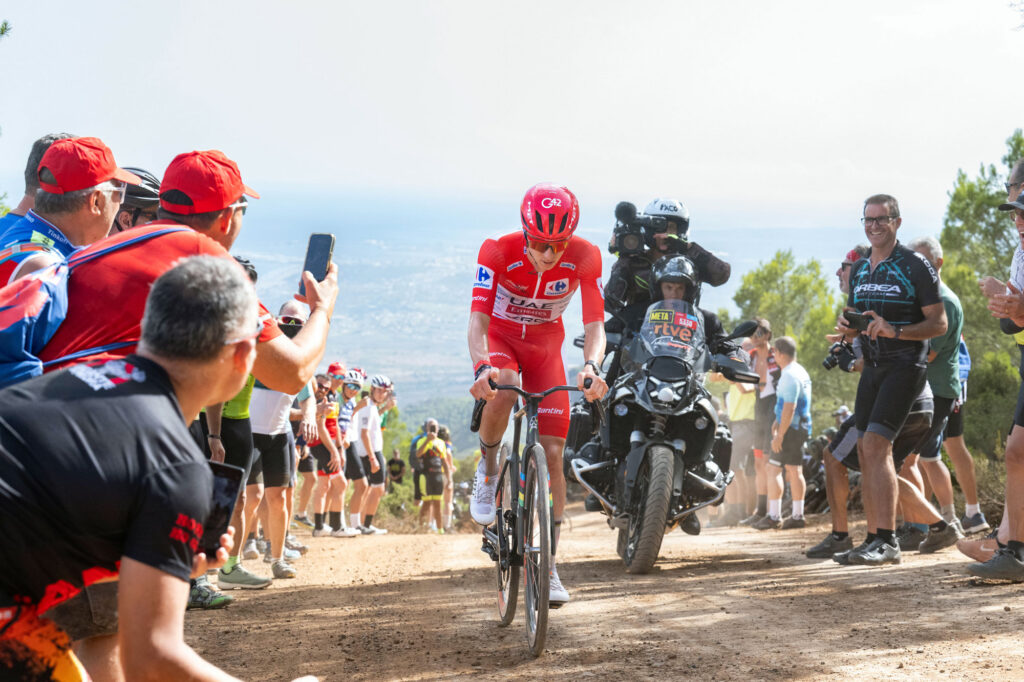
His crash in stage eight of the Vuelta – and subsequent abandonment – has changed everything.
Suffering from a displaced fracture of the left collarbone (while in a dominant position as the GC leader at la Vuelta, 3:50 ahead of the next-best rider, Enric Mas of the Movistar team), Pogačar might realistically have been able to return in time for the road race at the world in Canada (27 September)… if that had been his only injury.
There are precedents for relatively rapid returns to winning form following such injuries. Consider Jasper Philipsen last year. He won the opening stage of last year’s Vuelta a month after undergoing surgery for the same fracture as the Pogačar sustained on Saturday. Generally, it takes a pro cyclist around a week to resume training after a collarbone fracture, starting with time on the home trainer, then another three weeks before they get back on the road. Then, if all goes well, around four to six weeks before they consider a return to racing.
Because of his concussion, however, the medical team managing the early days of the former race leader’s recuperation has been specified that Pogačar will undergo surgery later than what is typical for pro riders with similar injuries.
Pogačar’s precarious predicament
On top of the collarbone fracture and concussion comes the “stable cervical fracture of the C7 vertebra”, which suggests treatment with a neck brace – and at least six weeks for the bone to heal. If we consider the typical recovery period, his comeback to racing wouldn’t be until the final one-day Monument of the season, Il Lombardia on 11 October.
There have been some optimistic suggestions of Pogačar being able to resume racing before other objectives that had been outlined for his 2026 campaign, but the reality more likely points to a premature end to his season, effectively concluding when he landed with force on the tarmac on the road between Puçol and Xeraco in stage eight of the Vuelta.
A hierarchy to be clarified
“Now he is with the medical staff and we’re going to try to carry on with this team’s mindset,” said UAE’s sports director Matxin Fernandez shortly after Pogačar conceded that his injuries were such that he couldn’t continue.
His only other race-ending crash came in Liège-Bastogne-Liège in the 2023 season. He suffered two fractures in his hand (the scaphoid and lunate bones), and it took Pogačar two months to return to racing (first at the Slovenian national championships, then the Tour de France, where he was below his usual level and was beaten by Jonas Vingegaard).
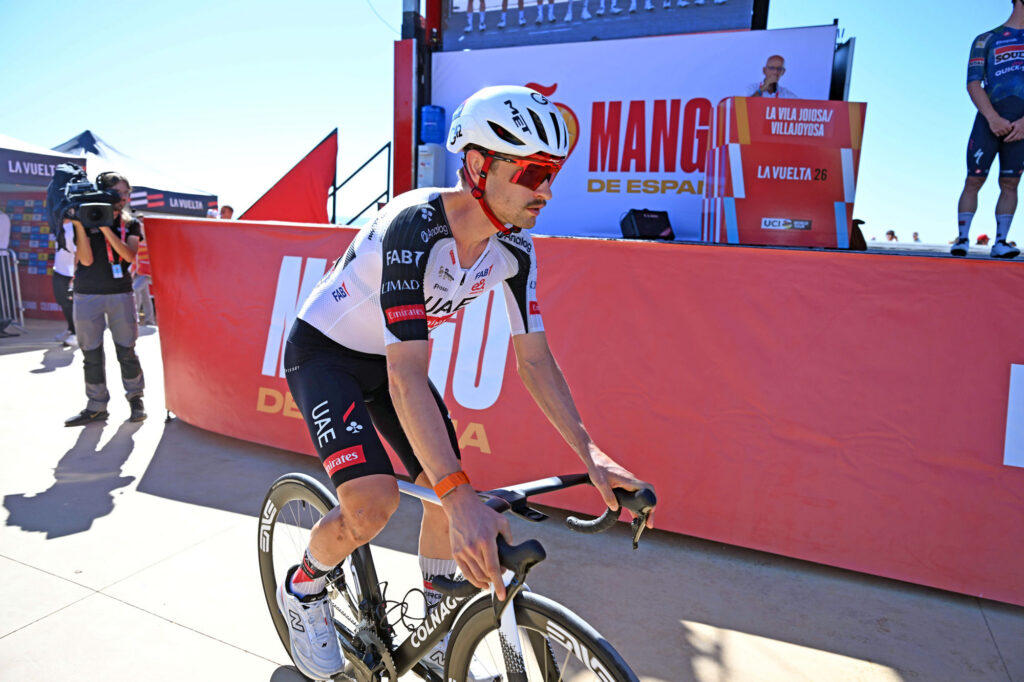
“Tadej has given a lot of wins to his team-mates,” continued Fernandez on Saturday, “we have to keep our spirits up so we can win and dedicate those victories to him.” Six of his team-mates surrendered any personal general classification ambitions when they stopped to assess the damage of his crash on Saturday but they can still target stage wins in the final fornight of the Vuelta, especially given the current form enjoyed by the likes of Pavel Sivakov and the two-time KOM of the Spanish Grand Tour, Jay Vine.
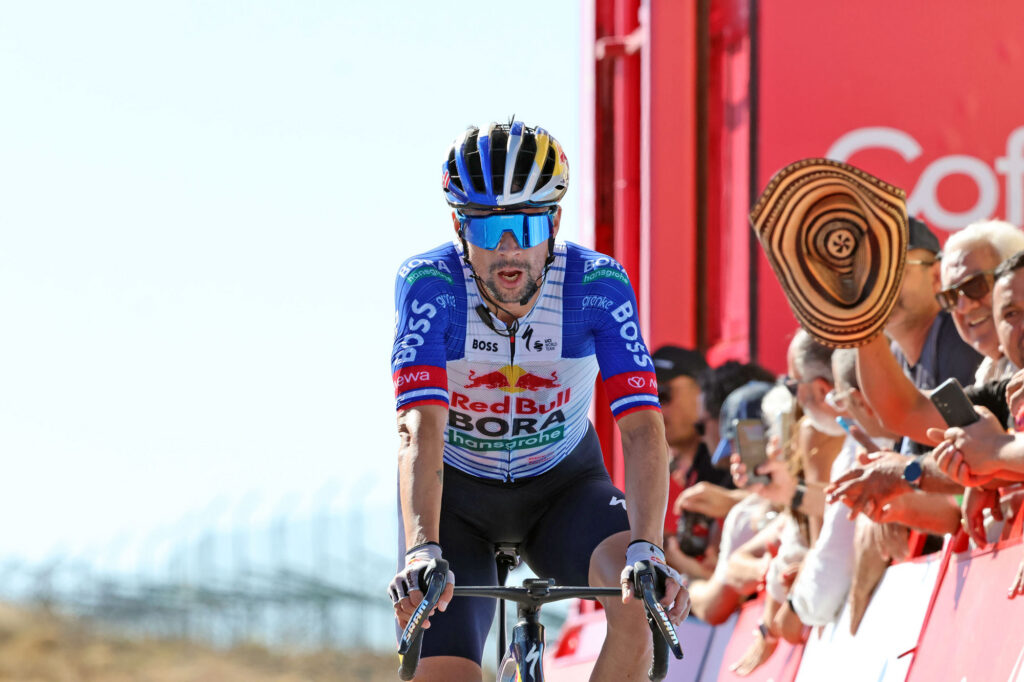
Without Pogačar in the race, the battle for the Vuelta’s red leader’s jersey also becomes particularly wide open.
Until the crash, the key question regarding the battle for overall honours at the Vuelta was about who the likely runner-up would be. Joaquim ‘Purito’ Rodriguez, who finished second on GC in the last Vuelta he contested (2015), offered his appraisal of the race at the beginning of the second week. “Enric Mas, Primoz Roglič, Oscar Onley and Felix Gall are going to be the four riders fighting it out for second place,” said the former rider at the start of that ill-fated day. The Spaniard unintentionally identified the contenders for overall victory when the Vuelta concludes in Granada on 13 September, noting that Richard Carapaz “was already starting to be a bit behind the others” and that “Mattias Skjelmose has already lost a lot of time”.
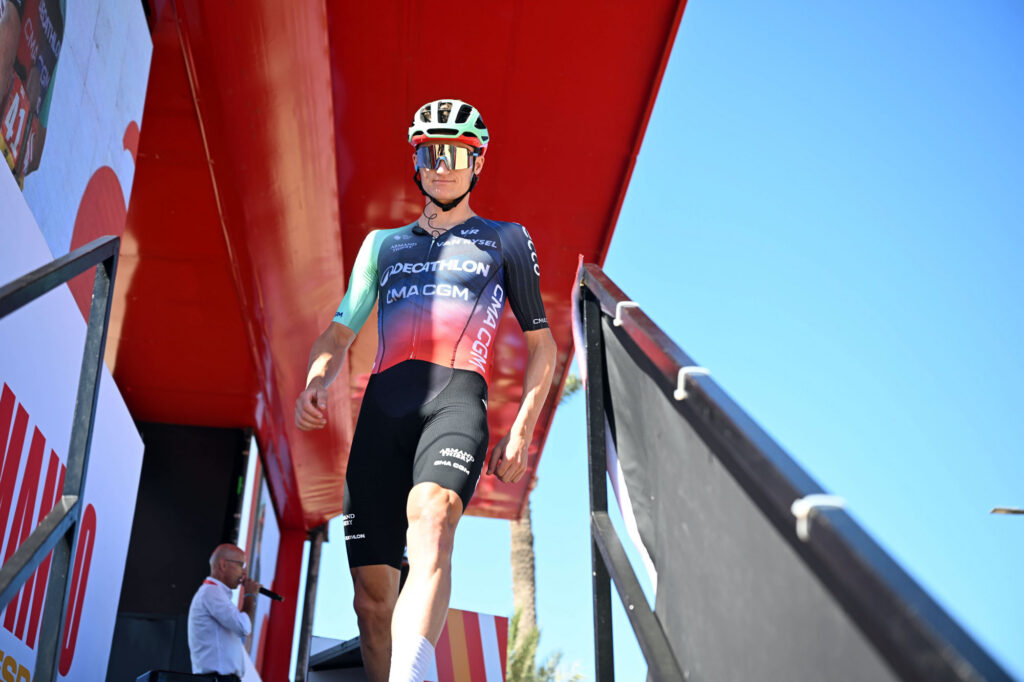
With the exception of Roglič, a four-time Vuelta champion who arrived at the start with a less-than-ideal lead in to the race after crashing in July, none of the candidates listed by Purito has yet won the Vuelta. And so the pivotal ninth stage – with its brutal 187km route from Villajoyosa to Alto de Aitana featuring over 5,000m of elevation gain, the first stage in 2026 without the presence of Pogačar – helped shine a light on what we can expect in the weeks to come.
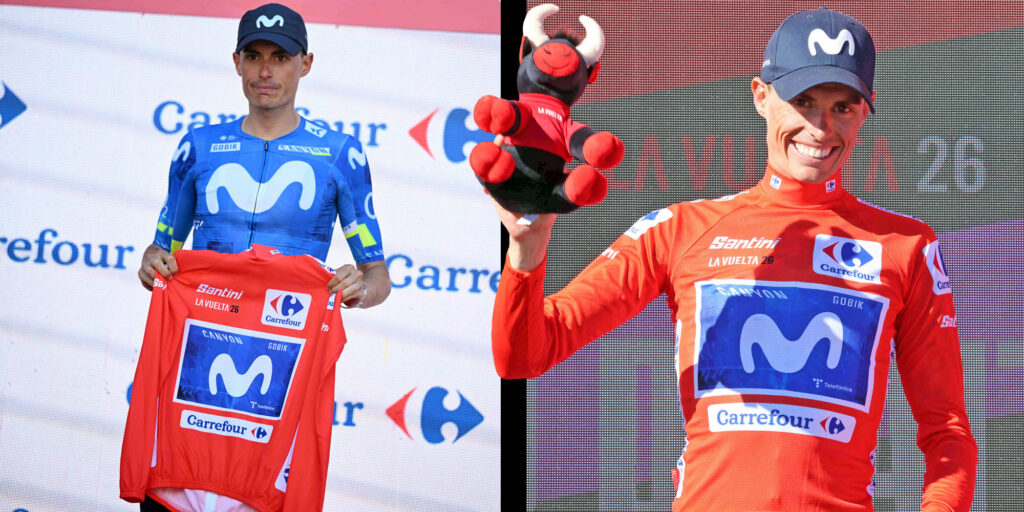
Mas took the GC lead after Pogačar’s crash. He showed respect for the fallen and didn’t don the red jersey during Saturday’s podium ceremony but he has helped clarify what the likely hierarchy of the Vuelta will be now that the world champion is focussed on recuperation rather than racing.
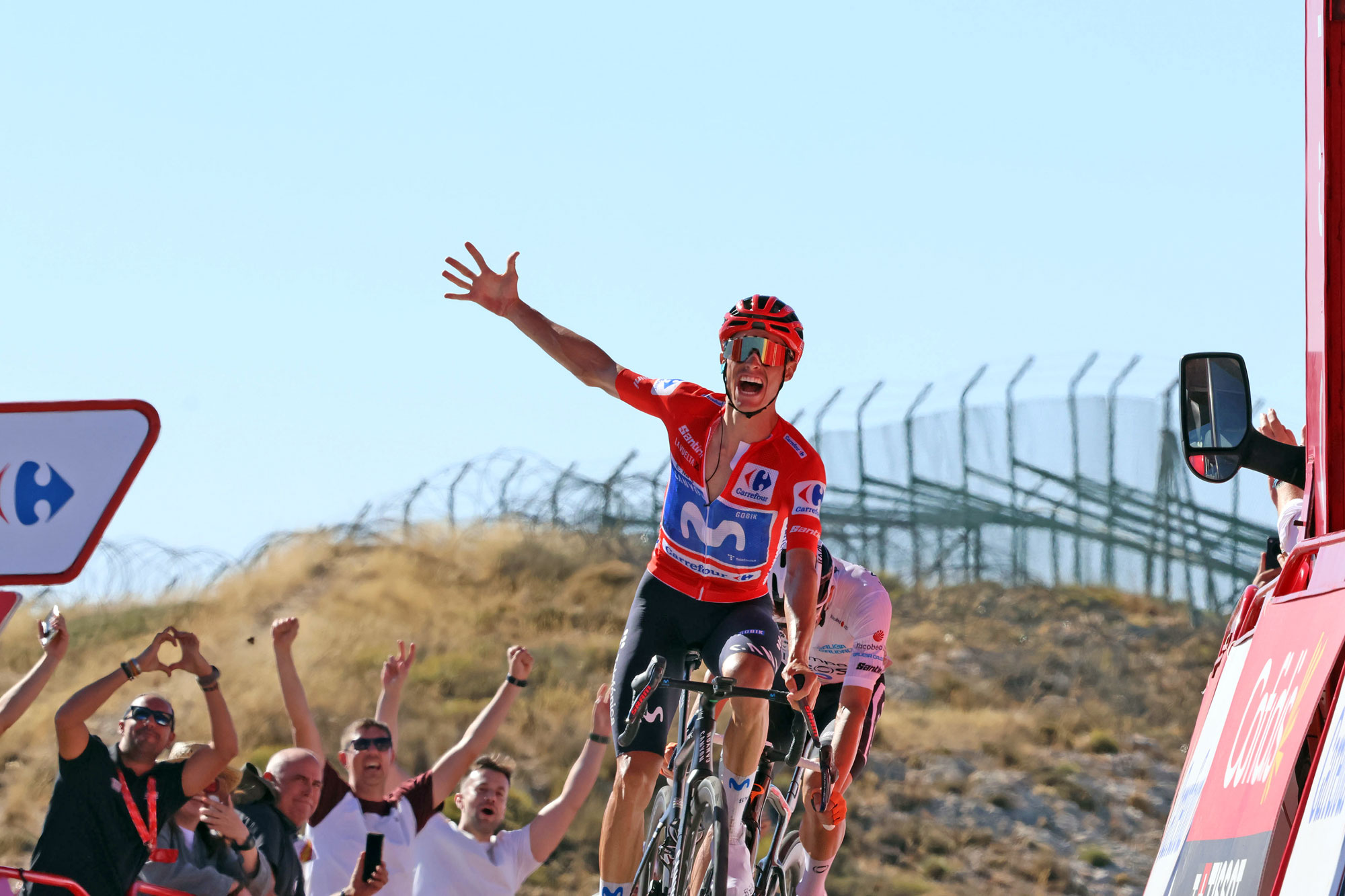
Pogačar is out of the race. There is a new leader. And, once again, it was the rider at the top of the GC standings who was best in the mountains of Spain. Mas had surprised the Slovenian when they were rivals and, it would seem, he’s surprising himself now that he’s inherited the lead of the Vuelta. First place at Alto de Aitana, his first stage spent clad in the red jersey, and apparently leading the way to Granada.
Monday’s rest day offers Mas a chance to reflect on his conquests during a wild weekend of racing and a momentary pause in proceedings. When the Vuelta resumes on Tuesday, the Spaniard from Movistar will line up in red. Based on his impressive winning performance on Sunday it seems likely that he’ll earn a few more days in the lead of GC. Could that turn into a few weeks? We wait to find out what happens next in what has become a far more open Grand Tour than what it was when Tadej Pogačar was leading proceedings.
– By Luc Herincx (L’Equipe)