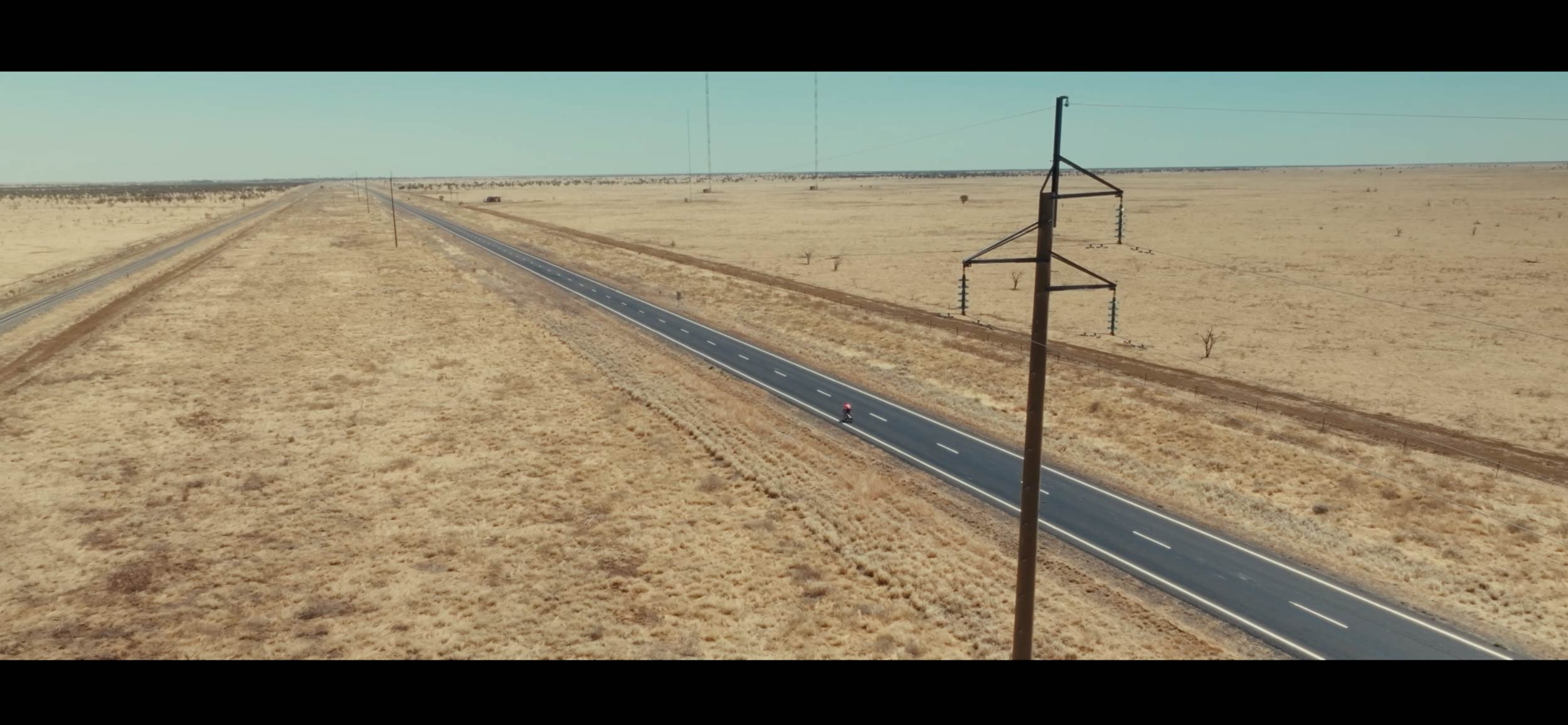
Lachlan Morton is a pro cyclist who likes to do things differently. He’s been part of the WorldTour peloton but the 32-year-old now races against rivals of a different kind. Often it’s just him against the elements with a quest to do something special that turns a ride into a competition.
‘Lachy’ is a unique member of the EF Pro Cycling family and he earns his keep by going to extremes on his bike.
The Great Southern Country is a movie about Lachy’s epic ride around Australia: 14,200km in 30 days nine hours and 59 minutes.
(The full 1h47min film is now on YouTube, click the link below to watch.)
– Interview by Rob Arnold
Introduction // The Great Southern Country
You learn a lot about what the human body is capable of thanks to this stunning feature-length documentary by Scott Donald Mitchell and Angus Morton, Lachlan’s older brother. The extent of suffering endured in the quest to set a new Around Australia Record is apparent throughout the film. So too is the surprising level of calm Lachy exudes… but we also learn that, despite his phenomenal achievements, he is not an automaton.
His ride is inspiring in many ways and the response on YouTube from the first day of screening alone – with over 40,000 views and 150 comments – highlights how Lachy’s race against time, the elements, the weather, and his own mental demons has captured the public’s imagination.
“Unreal effort,” is one YouTube comment from Ian Gauthier. “Admirable grace. An inspiration to all human beings who seek the limits.”
Riding a bike around Australia has been done before, and others will surely find inspiration to explore this gorgeous country after seeing the film but its highly unlikely anyone will eclipse the efforts of the remarkable Lachlan Morton.
There is a growing chorus of compliments with viewers thanking Lachy for showing what a human being is capable of achieving, with plenty also expressing their gratitude to the sponsors who made this epic ride possible, and the filmmakers for capturing the essence of the adventure.
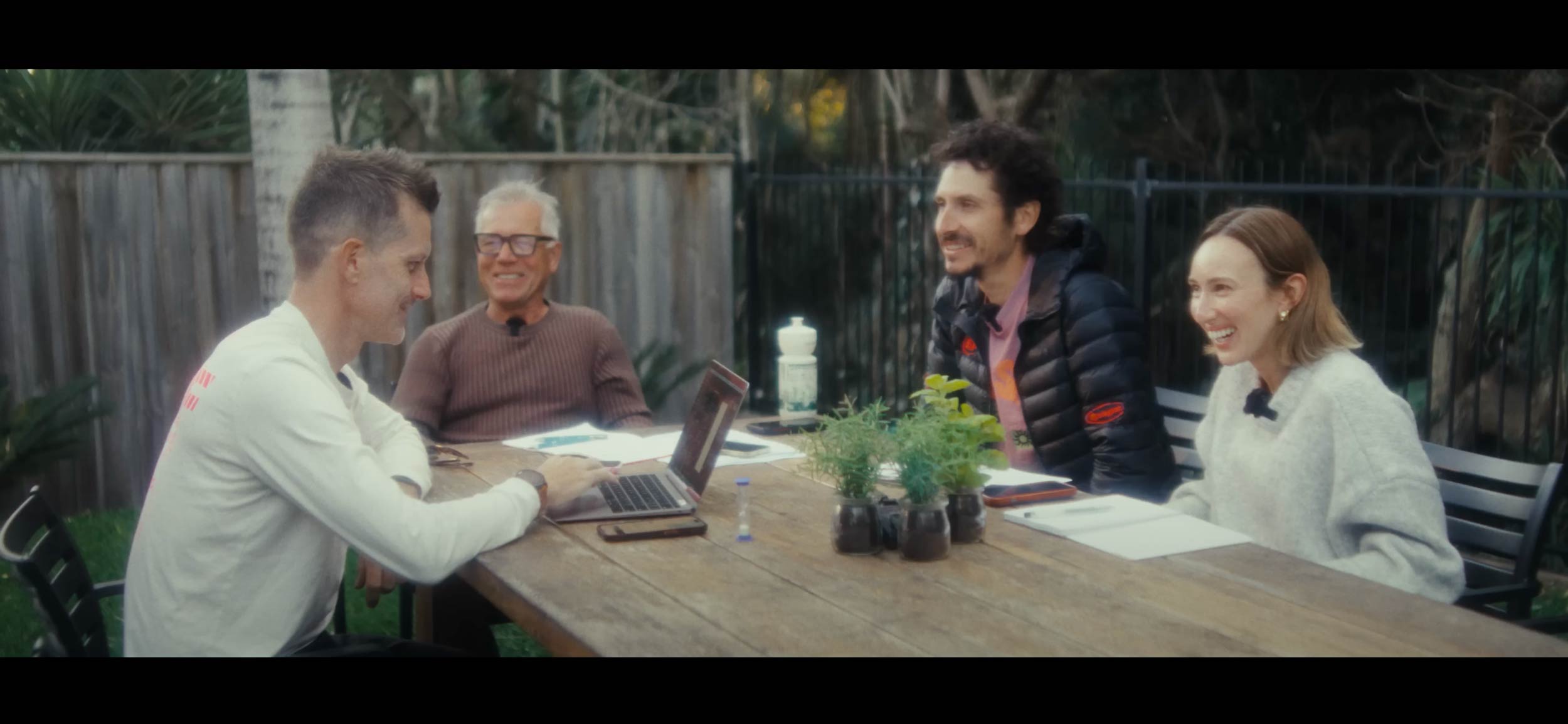
We get to see an amazing display of physical endurance and mental tenacity. The Great Southern Country also exposes many of us to places we may never visit, and it does so in a respectful, honest way, with recognition of First Nations People and their land.
We learn about the battles endured by Lachy on a ride that became an obsession, for him and a small but committed support crew; family and friends who also made the journey around Australia… they know him well but even so, the effort and commitment shown by this extraordinary bike rider exceeded their expectations.
The cyclist and his trajectory lay the foundation for an epic tale. The images and emotion captured tell the story beautifully. The commentary from his wife, coach, and others from the support cast remind us that it’s not only the athlete who is challenged by an undertaking such as this. They face battles of their own while they watch on, often unable to reel in the ambitions of a rider who seems unstoppable.
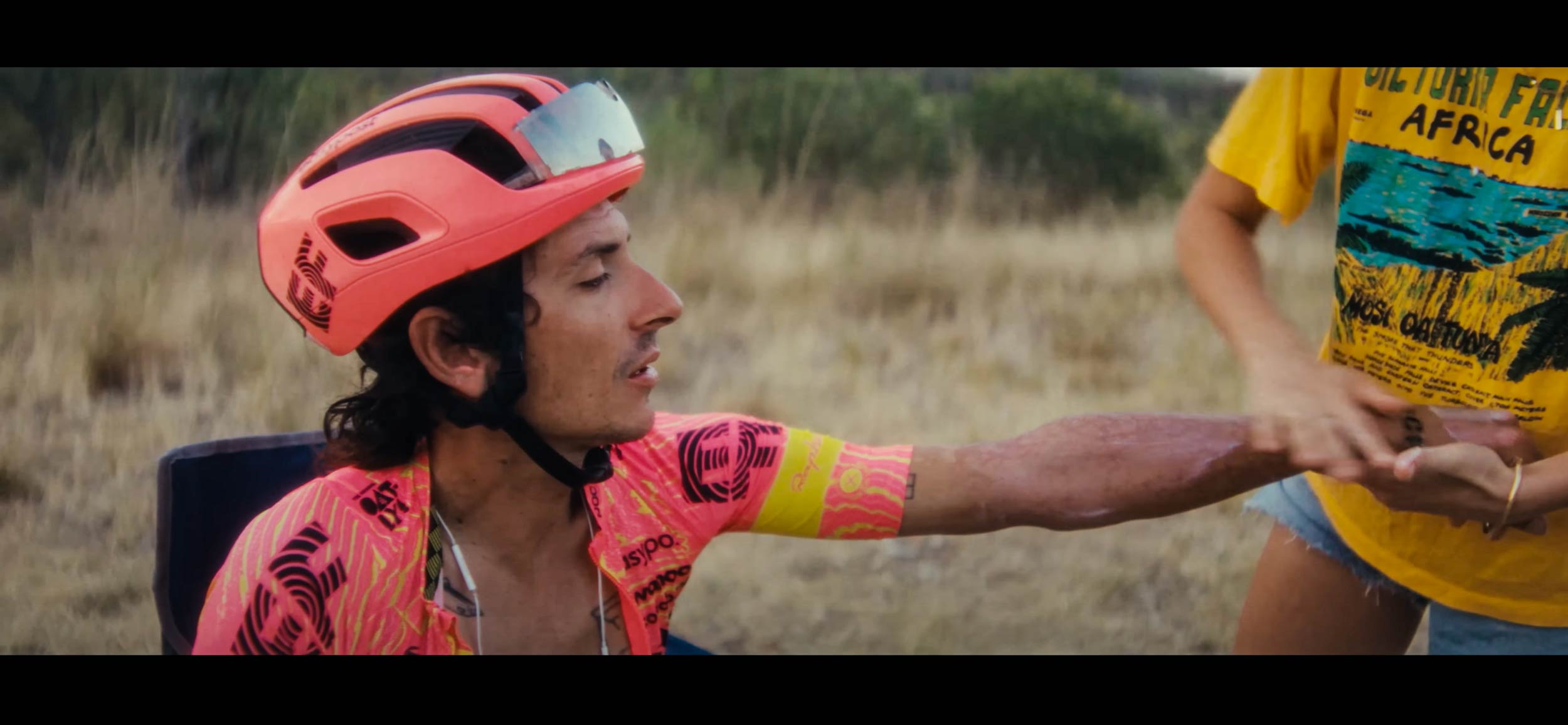
Lachlan Morton has repeatedly shown he is capable of doing extreme things. But he is human. He is fallible. He does reach his limit. But he is also stubborn enough to push beyond the pain, the sleep deprivation, the headwinds, the dangerous predicaments, the mental anguish, and myriad other hurdles encountered.
It’s often what’s not said that speaks the loudest in a film that documents an effort that is truly inspiring, even if few others will ever try to replicate the ride.
– Rob Arnold
Click the link above to watch my interview with Lachlan Morton on the day of The Great Southern Country film premiere in Sydney and / or read the transcript below.
Interview chapters
| 0:00 | Introduction |
| 0:38 | Getting the conversation started |
| 1:50 | “Wear and tear” impact on the body |
| 3:14 | Before vs After |
| 4:11 | Importance of sleeping routine |
| 7:37 | “Mentally it was strange to finish” |
| 9:20 | “There are routes I’d like to do again” |
| 10:40 | “You could do it quicker…” |
| 11:55 | Cycling as therapy |
| 13:15 | Comparison with traditional pro cycling |
| 14:40 | The competitive urge remains |
| 15:42 | Advice for other bike riders? |
Note: This interview was recorded shortly before viewing the film. The transcript has been slightly edited for clarity. Please excuse the poor audio of the interview. – Rob
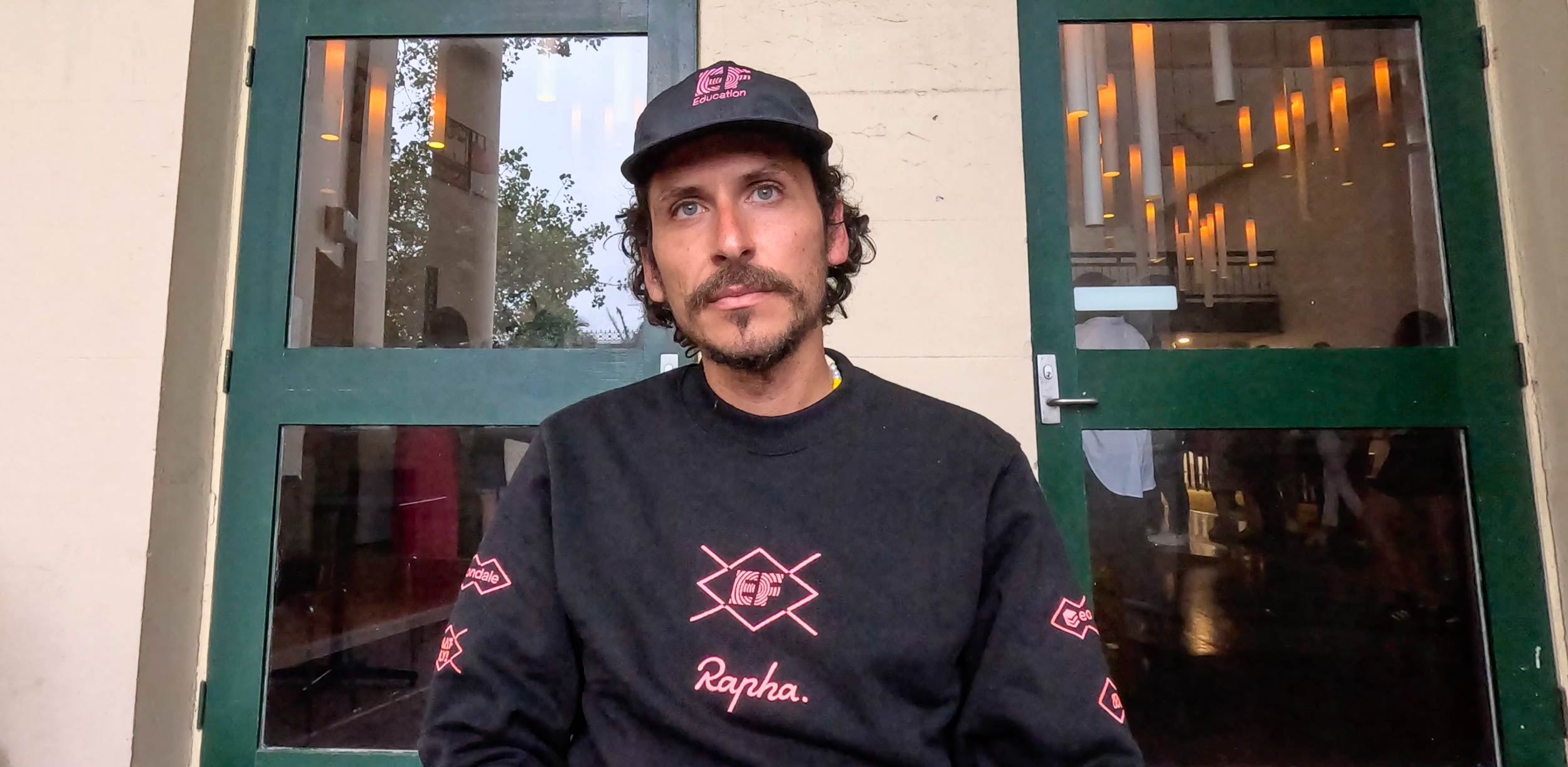
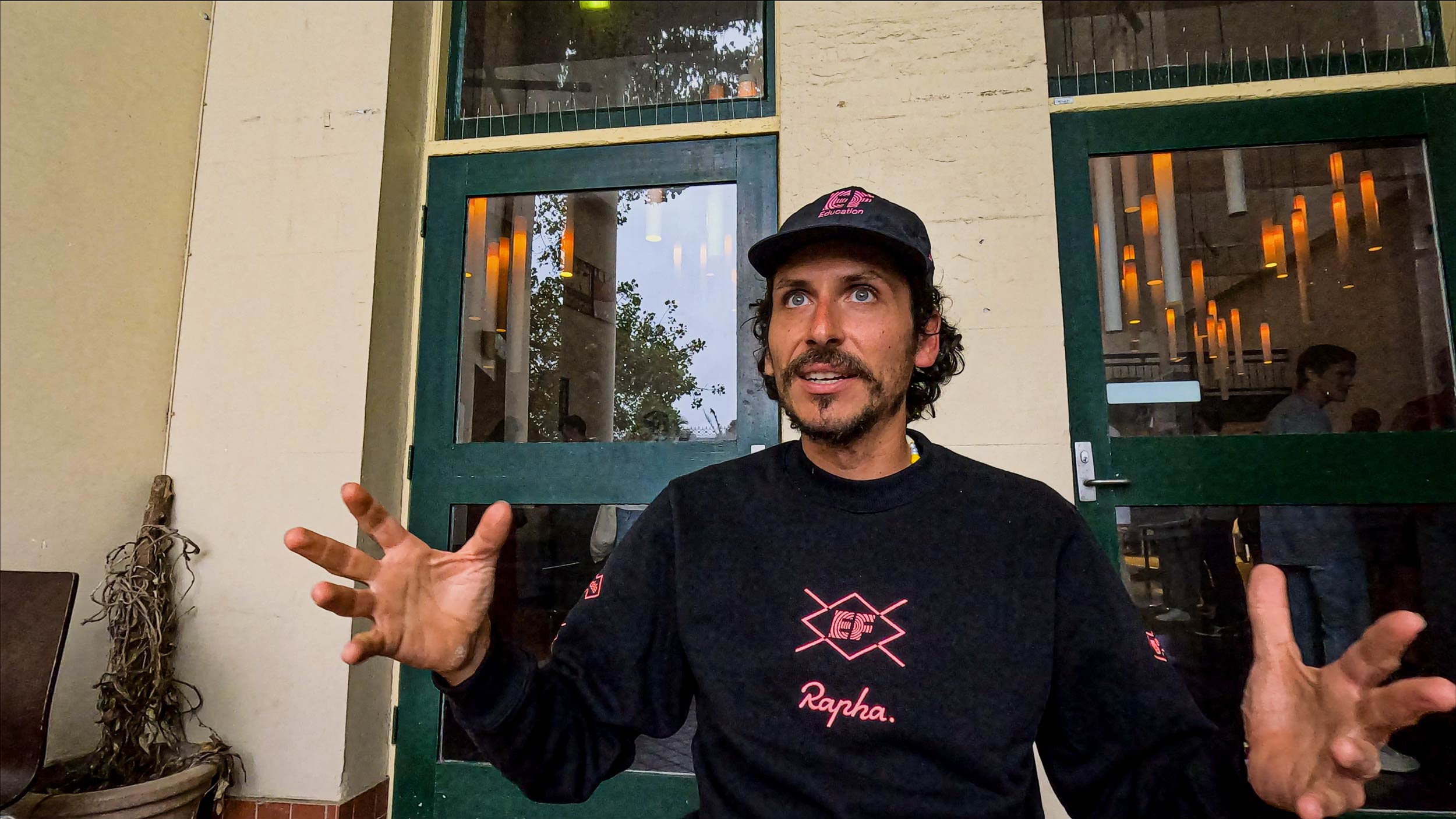
RIDE Media: I have an opportunity to sit down for 10 minutes with Lachlan Morton on the day of his film premiere for The Great Southern Country – and soon it goes live across the world. It’s a pleasure to catch up casually. We can cover a lot of territory but, first of all, congratulations on getting around the country very quickly. I’m sure your legs are still spinning, but I don’t think you ever stopped riding, did you? You just… ah, had a day off and that was about it?
Lachlan Morton (EF Pro Cycling): “Yeah, yeah, basically. I had a bit of racing to do still so I was trying to keep moving afterwards but once I finally got home (to his base in the US) I had a bit of R&R and kicked back to let the body catch up.”
RIDE Media: And now? Does it all feel normal again? Do you have any muscle memories still twitching a few months later or not?
Lachlan Morton: “No, I’m all right now… For a few weeks – or probably a month afterwards – there was a lot of muscle damage, a lot of wear and tear. There was a short period when I thought maybe I’d done some permanent damage.”
RIDE Media: You’re reaching for your back. Does that mean it was…
Lachlan Morton: “Nah, not my back. It was just like my legs. Every time I tried to go hard I just had a lot more pain. I did a race – I think it was 10 days later – and that was probably the worst I’ve ever felt racing.
“I mean, doing something like this, you never know what the recovery is going to look like because it’s something new for me and I guess not a lot of people jump from that distance back to shorter racing distances… So, it’s always unknown.
“Eventually, once I started preparing again for this year, things slowly came back but I had to work a bit on lifting weights again, and just doing some things to build some muscle and strength back after just such a long endurance slog.
“So yeah, there was work to be done to recover but it was more that, like ‘work to be done’ as opposed to time off.”
RIDE Media: What were the body differences from beginning to end? Did your weight fluctuate a great deal? Did you feel like you’d changed?
Lachlan Morton: “I don’t know. I mean I never weigh myself so I don’t know weight-wise.
“I’m sure that there would have been some changes but from looking at myself before and afterwards, I didn’t feel like I’d dropped a great deal of weight.
“There was only one day I was crook where I couldn’t really eat well but beyond that my appetite was good, so that’s kinda how I go about it. I eat to my appetite and I never felt like I had to force anything. I felt pretty healthy, I guess, and I was pretty strict with sleep – just through experience…”
RIDE Media: During, or after, or before?
Lachlan Morton: “During. Yeah, during… making sure I got around six hours a night. There was a couple of nights I got eight hours, one or two nights I was only able to get like five hours, but I think keeping that sleep helped me recover pretty well.
“It’s all relative, right? Like, I didn’t finish feeling great but I felt healthy. There wasn’t any chronic symptons beyond just tired legs and generally feeling fatigued. So, I was lucky.
“The first half, I would say was, for me, harder physically because your body is adapting and I didn’t do any specific ultra training. The way my seasons work I don’t really have the time to put in to being [specific]. Like, ‘I’m going to spend the whole month getting ready to ride around Australia…’
“I basically had six days at home before I came to Australia where I could get on a road bike and start to prepare.”
RIDE Media: The ride is the training. It’s the only way a thing like that could be. It’s not like you’re going to go out and do a practice run.
Lachlan Morton: “Yeah. And that just kinda means that your body goes through a lot of uncomfortable adapting in the first week to 10 days.
“For me it was like everything from my saddle – you know, saddle sores… that kind of thing. Like your body is building up a tolerance to being in the saddle that long – to callouses on my hands…
“Both my achilles blew out pretty bad in the first week. They were super swollen and I still have no idea where that was from.”
RIDE Media: And it just went away? Was there some acupuncture, or some fancy treatments?
Lachlan Morton: “No, nothing crazy. Athalee Brown [one of the support cast, Graham Seers’ partner] was along with me and she was giving me rubs – just generally trying to loosen it up. It’s just that your body has to start adapting to what it’s doing. And you’re kind of in a state where you’ve got to nurse it a little bit.
“Eventually it feels like your body catches up with your head and says like, ‘Okay, we’re going to keep doing this…’ and it kicks into gear.”
RIDE Media: It just goes on auto-pilot after a couple of weeks…?
Lachlan Morton: “Yeah, yeah, exactly.
“The second half [of the ride], I’d say, was a lot more mentally challenging with the building fatigue; just staying in it at that intensity, day-in day-out, it gets difficult and that became the biggest challenge.
“Then, going into recovery, I think mentally it was strange to finish.”
RIDE Media: Difficult to start, harder to finish because you got so accustomed to riding?
Lachlan Morton: “No, just like… I mean for a whole month I didn’t go into a shop. I didn’t drive in a car. I didn’t watch TV. I barely looked at my phone… like, I wasn’t doing anything that I guess modern living requires.”
RIDE Media: It was just: ride, eat, sleep… that was pretty much it.
Lachlan Morton: “Yeah. And I’d chat with the crew – like, I had that. But that was kind of it.
“It was really nice having that break – in a way – from life, but then when you drop back into it, it’s strange. Like, the next day, I wanted to cook dinner. One, because I hadn’t cooked anything for ages but I wanted to cook for the crew because they’d been looking after me. And I went to the supermarket to try and get everything. I had, like, six things to find and it took me like an hour to get around. It was a struggle, like the interaction with people… a lot of it was [difficult].
“Also, every time I’d fall asleep, I felt like I was back riding again – you know, like, living it every night… it was bang-on two weeks and then that kinda slowly disappeared but there are a lot of those things that are just strange; to go to a dead stop after doing something so intense for such a prolonged period.”
RIDE Media: You said this was “something new”, but that’s kind of your gig, isn’t it? Dreaming up new things every time. Is there one where you’re like, ‘Oh, I’ll do that again, that was the most fun?
Lachlan Morton: “There’s definitely routes I’d like to do again. Like a lot of the bigger rides that I’ve done, I’d like to go and ride the route again but more so in like in… to tour.”
RIDE Media: Just cruise…?
Lachlan Morton: “Yeah, yeah. There’s a lot you miss going quickly. A lot of places you’d love to hang out in for a bit longer and you can’t because you’re racing, in a way.
“I still saw so much! But you also see places in passing, especially in a country like Australia. Or even routes like the Divide in the US. You cover so much ground that you kind of identify places that you’d love to come and spend more time.
“In terms of repeating a ride there’s always a temptation because as soon as you finish you’re like I could do this better… I could be faster… because you learn so much, right?
“I have no doubt that, if I was going to ride around Australia again, I could do it quicker because you just have so much more experience, right? You know where you’re going…
“But I’d rather take that time and energy and just put it into something else that’s new rather than just become obsessed over a route – because, again, when you really get into the details and the weeks of performance and going fast, it starts to lose its appeal for me. That’s sort of what I used to do.”
RIDE Media: That’s why you want to now go for a ‘slow’ ride, I suppose.
Lachlan Morton: “Yeah. You’re doing something quick but it’s so much more than that, like the experience. You see a whole bunch of new places. You’re testing yourself in a way but it’s not about peak performance, I don’t think.”
RIDE Media: The performance aspect is intriguing, but I think it’s the emotional [lessons] and the mental challenge that really appeal to me, the things that you overcome.”
Lachlan Morton: “Yeah.”
*****

RIDE Media: I’ve only ridden with you twice in the last couple of months. Once was coming back from Willunga [after the finish of stage five of the TDU] on Saturday; it was a great deal of fun, dodging a lot of other bike riders… and then the other time was when you were coming to Sydney on your epic journey. And it felt like there was just only one speed, and it’s just “GO!’ the whole time.
When you’re speaking, however, it’s nice and mellow and calm. Is there a ‘legs’ and ‘mind’ element to you?
Lachlan Morton: “I think bike riding has always been an outlet for me in a lot of ways.
“I think I’m most comfortable when I’m riding. I think clearer and if I removed that from my life, I’d probably be less calm.”
RIDE Media: But you do get excitable and you do ‘Whoop!’ a bit… or not?
Lachlan Morton: “Yeah, I mean I love riding my bike. I get excited. If you get me in a race, I’m still a competitor at heart. But I definitely draw the line when I finish riding.
“I used to struggle with the fact that being a professional athlete is a 24 hour a day job… technically you’re on the clock when you’re racing but everything that goes into the preparation – from your sleep, to recovery… all those things are also what makes you a professional athlete. I always struggled with that a little bit; you never get off the clock. Whereas now when I’m done riding, I’m done riding. I don’t think about. Well, I think about it but I’m not like stressed about all those other details.
“And then, when I’m on my bike, I have more energy for it. I love it. So, yeah, it’s a different approach.
“I don’t think I’m like a different person when I’m riding.
“I’m a little bit of a different person [when I’m] racing, you could say, but I’m also aware that there’s a part of my personality that really enjoys and needs that outlet. But I’m sure one day there’ll be a time when I won’t need to pin a number on again.
“When I was younger it was more about proving myself, that kind of thing. Whereas now it’s just the intensity of the competition.”
RIDE Media: You’ve pretty much proven you can ride a bike far and fast…
Lachlan Morton: “Yeah, and I know I can do things. In terms of the races I wanted to win and things I wanted to do, I’ve done a lot of those things. So, I don’t have that itch.
“But even if it’s like two nights ago, going to Centennial Park to do the chop – once I’m in it, I love it! Like, everything’s gone and you’re just chopping – you and eight other guys and you’re just rippin’ each other’s legs off… that’s what I’m doing, you know? And I love something that’s so all-encompassing like that. I think that’s hard to replicate outside of competition.”
RIDE Media: We’ve got to wrap things up because we’ve got a movie to watch but when we were talking on the ride back into Sydney, you made one comment that resonated with me and that was that people in the country were far friendlier to bike riders. From all that you’ve learned, let’s say just from that ride – but if you want to apply other nations to the equation, I’m keen to hear… where is society best managing the bike rider? And, what would you suggest, after all that you’ve done, to make the bike rider a more acceptable part of society?
Lachlan Morton: “I guess I’m making a sweeping statement, maybe generalising a fair bit, but it seems like smaller towns where people know each other and, I guess, have more value on relationships, person to person, they seem to treat you more as a person. Whereas in cities everyone is kinda doing their thing; someone’s going to work… and if you’re stuck traffic, you don’t think, ‘Oh well, we’re stuck here together.’ You’re just like, ‘Oh, these cars are stuck in front of me.’
“I think, in the same way, it’s not like, ‘Oh, there’s a person on the way to work riding a bike…’ Rather, it’s just someone in your way.
“I don’t know what the remedy to that is.
“I think the cities that have the most infrastructure are obviously the best places to ride but that’s still like a separation tactic.
“I’d love to think that the more people become accustomed to bike riders being on the road, then they realise that it might just be their uncle, or maybe their kid… and it helps them create that link to ‘Oh, okay… it’s someone who we’re accepting.’ So, just like a general awareness.
“But it’s a hard question.
“I’m always so impressed with the dedicated cyclist in Sydney, for example, because when they go out riding – like when I’m here… I’m like, ‘Man, this is hectic!’ And it takes someone dedicated to go out there. It feels like you’re going out to battle.
“Obviously it’d be better if it’s not like that but that’s just how it is. So, I think it’s kind of unfortunately the responsibility of cyclists to be aware of their own safety and their surroundings and to try to minimise the risk element. But, at the same time, you’re also trying to do what you love and you don’t want to be out on the bike and, the whole time, trying to look over your shoulder to make sure that the driver of the car behind you has seen you, or whatever that is.
“For me, the approach that I have now is that I minimise my time riding on the road. If I’m training, I don’t ride on the road bike. I spend more time off road: one, because I enjoy the riding more because I can lessen that factor of having to look out for cars, but also to minimise the probability of having an incident.
“It’s still a risky thing to do, to go riding, and if you can minimise your chance of an incident, you’ve gotta do it.”
– Interview by Rob Arnold