Cannondale bikes in the pro peloton – 2004-2026
Cannondale first appeared in the top-tier pro cycling peloton in the 1990s when it supplied bikes to the Italian Saeco team that included a roster of star riders including the curious, charismatic sprinter Mario Cipollini. The US brand has maintained a presence in the world’s biggest races every year since, with one exception 2006. Ride […]
Cannondale first appeared in the top-tier pro cycling peloton in the 1990s when it supplied bikes to the Italian Saeco team that included a roster of star riders including the curious, charismatic sprinter Mario Cipollini.
The US brand has maintained a presence in the world’s biggest races every year since, with one exception 2006.
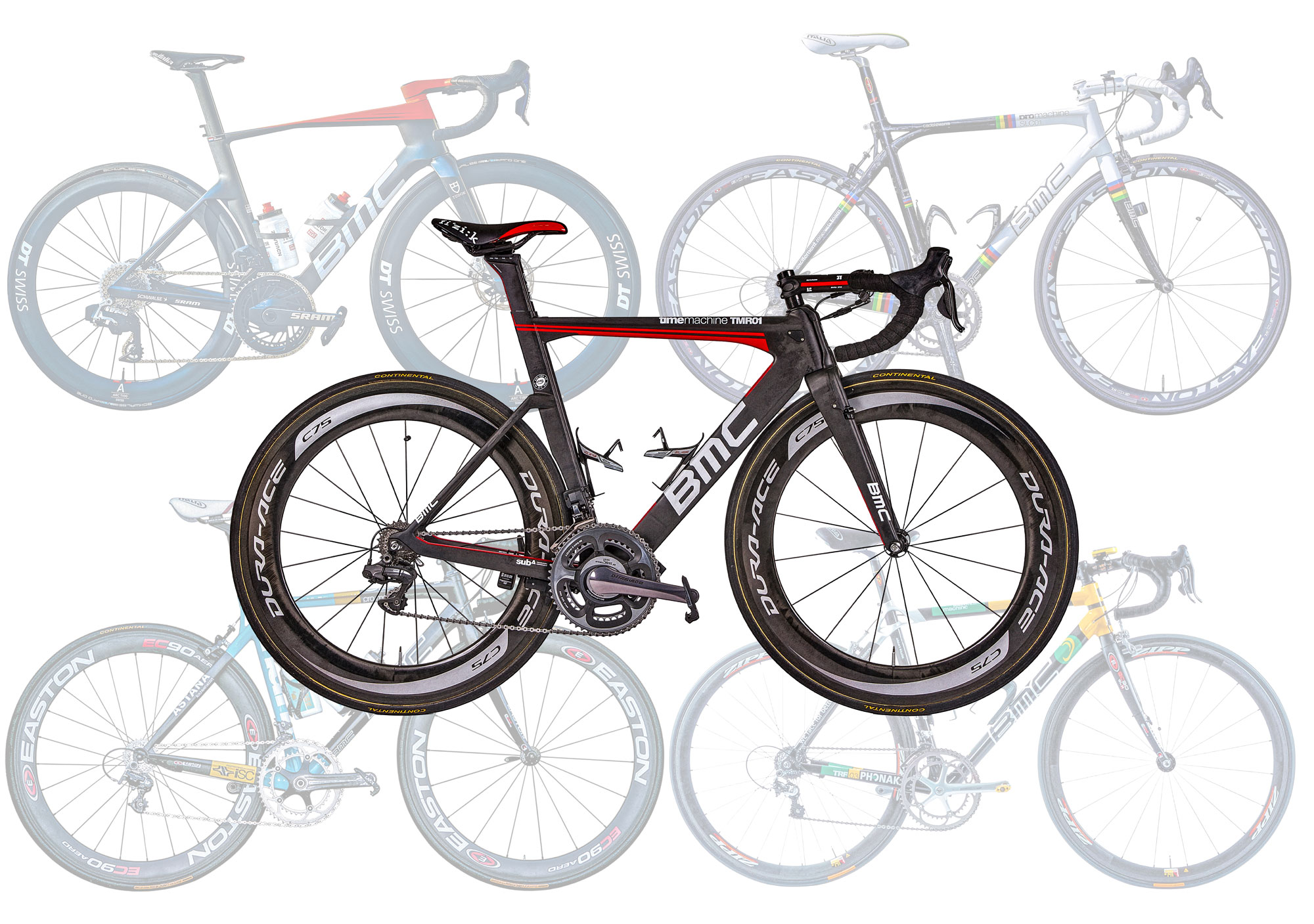
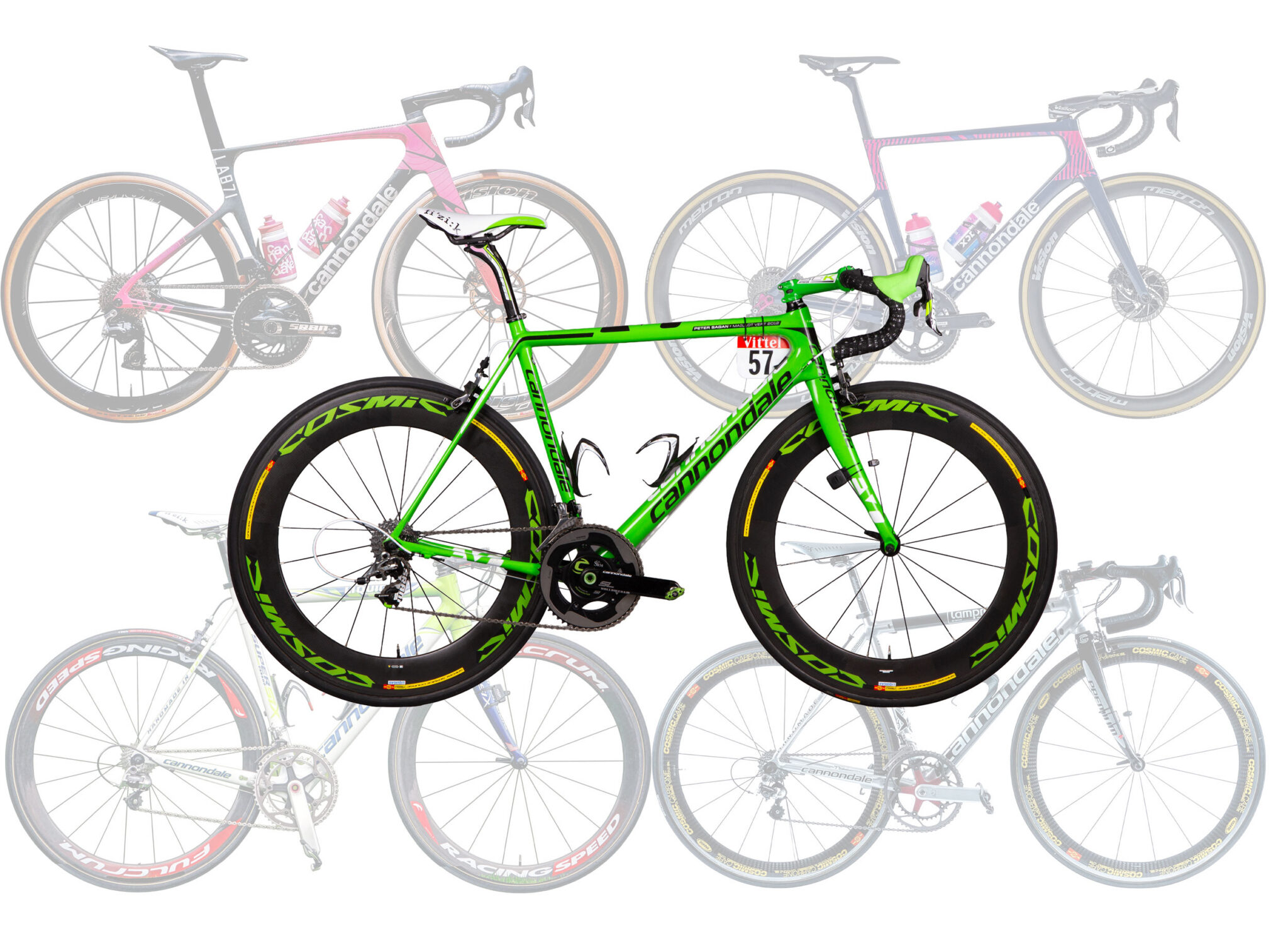
Ride Media began publishing the Official Tour de France Guide (Australian edition) in 2003 and this gallery includes images of Cannondale bikes raced by various teams from 2004 to 2026. The bikes featured in the gallery below are linked with the following teams and groupset brands:
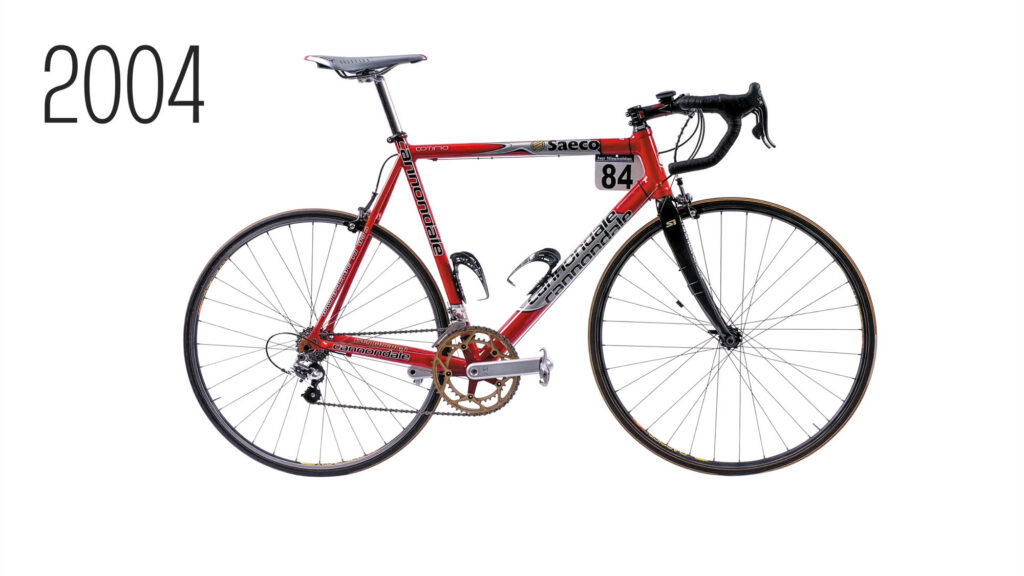
- 2004: Saeco (Campagnolo)
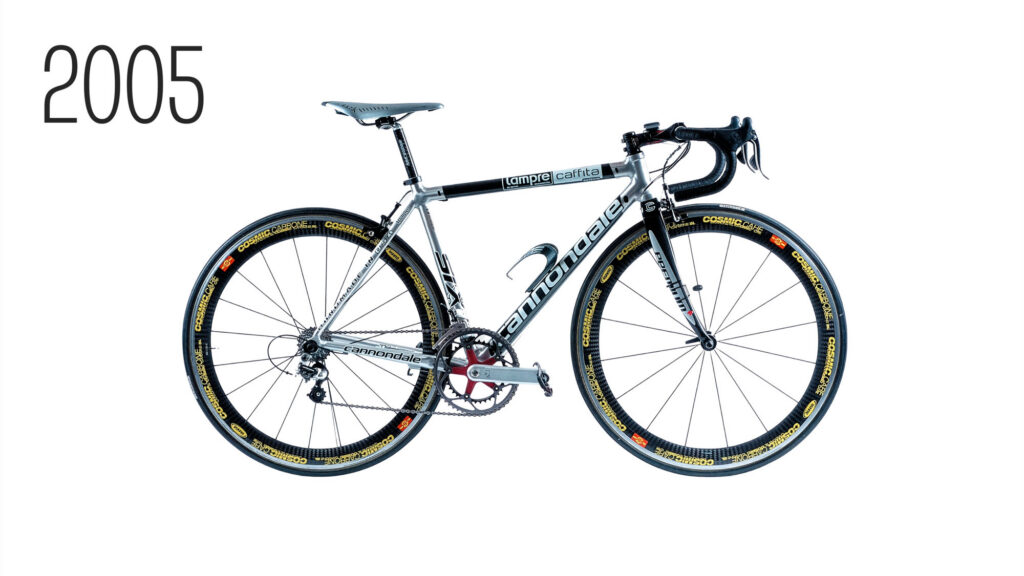
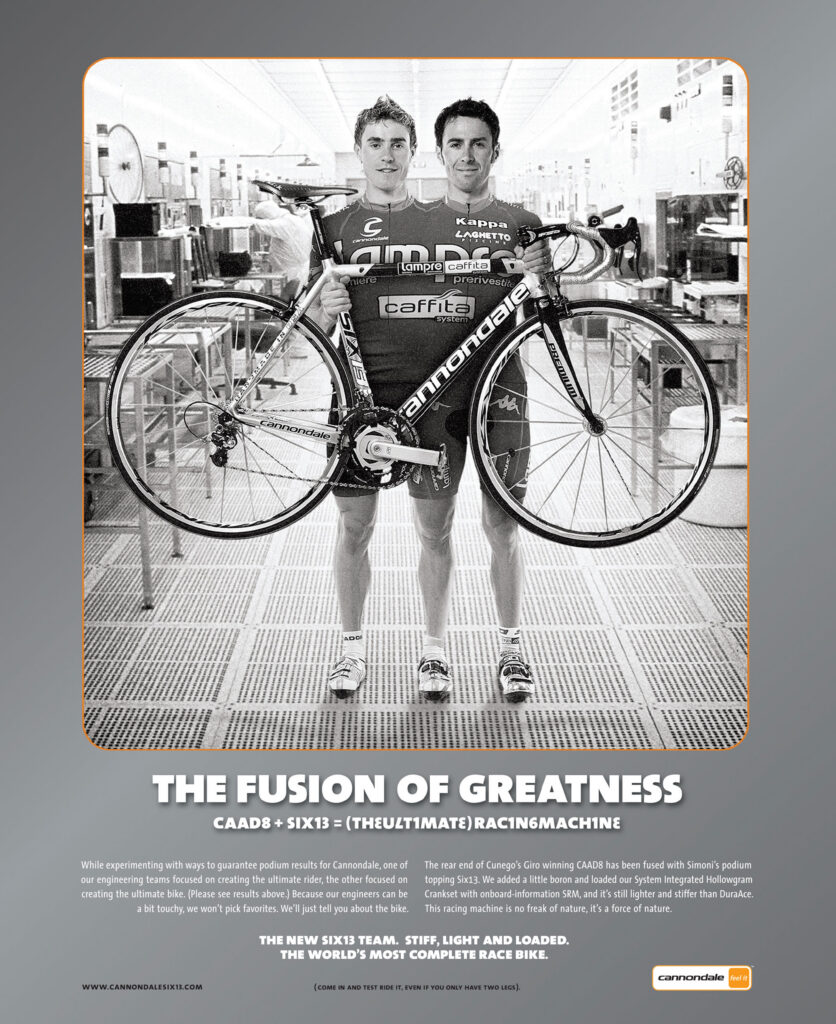
- 2005: Lampre-Caffita (Campagnolo)
- 2007: Barloworld and Liquigas (Campagnolo)
- 2008-2010: Liquigas (Campagnolo)
- 2011-2012: Liquigas-Cannondale (SRAM)
- 2013-2014: Cannondale Pro Cycling (SRAM)
- 2015: Cannondale-Garmin (Shimano)
- 2016-2017: Cannondale-Drapac Pro Cycling (Shimano)
- 2018: EF Education First-Drapac (Shimano)
- 2019-2021: EF Education First (Shimano)
- 2022-2025: EF Education-Easypost (Shimano)
- 2026: EF Education-Easypost (SRAM)
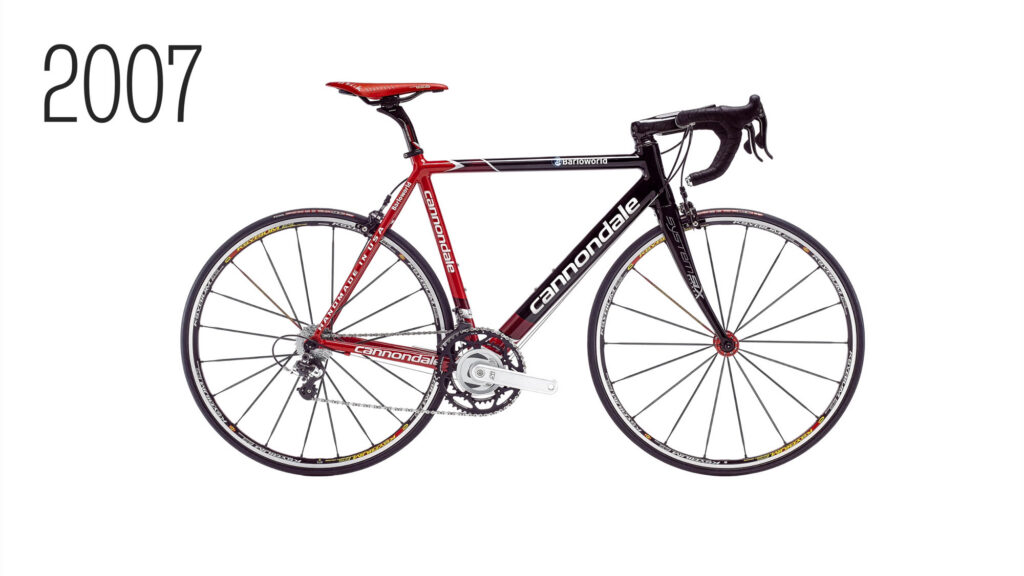
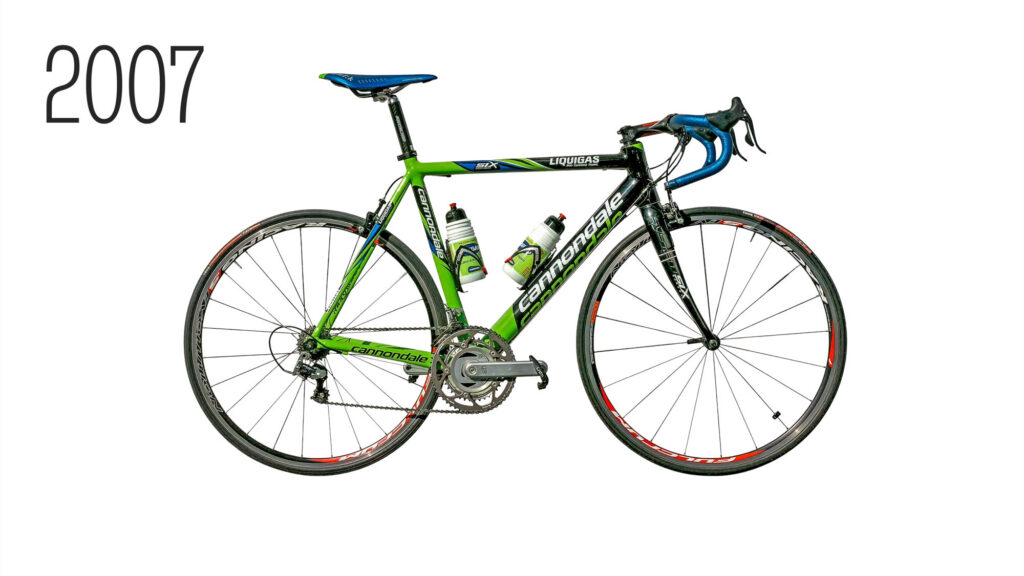
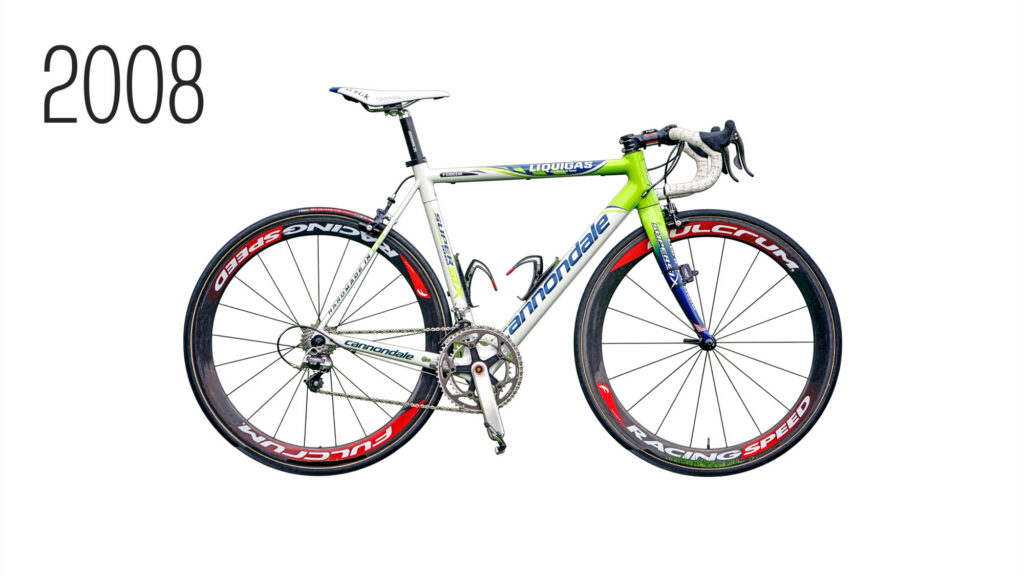
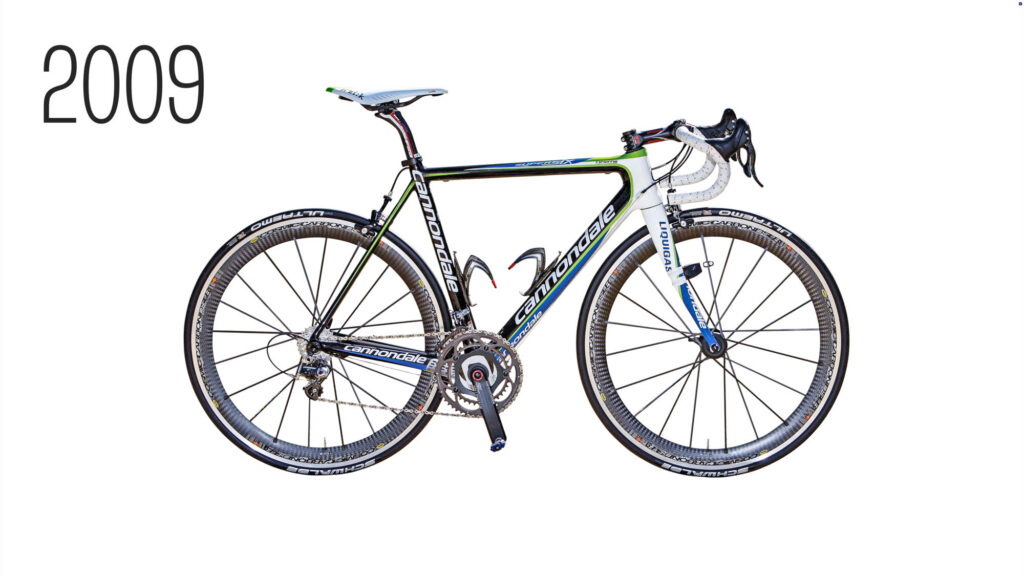
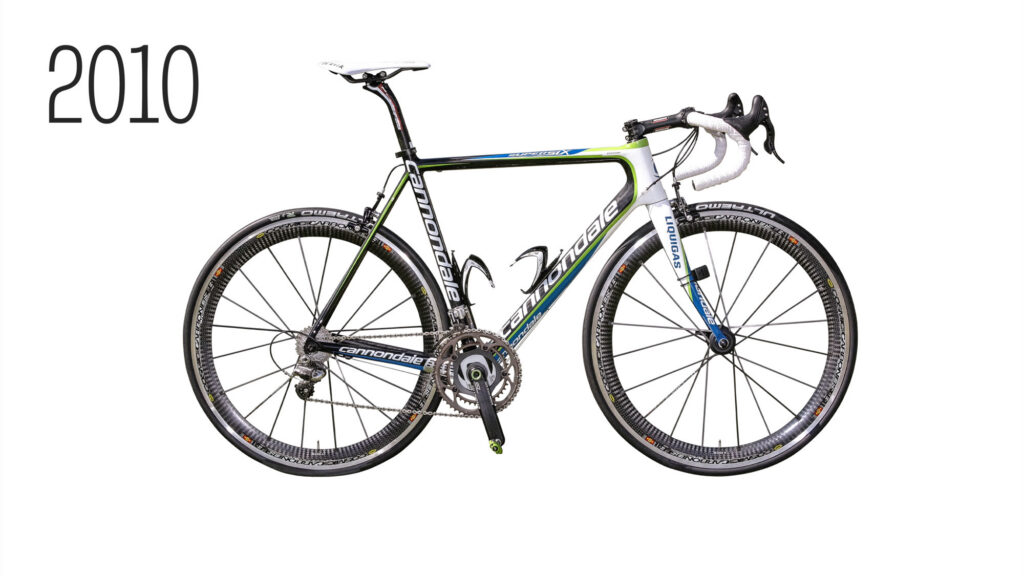
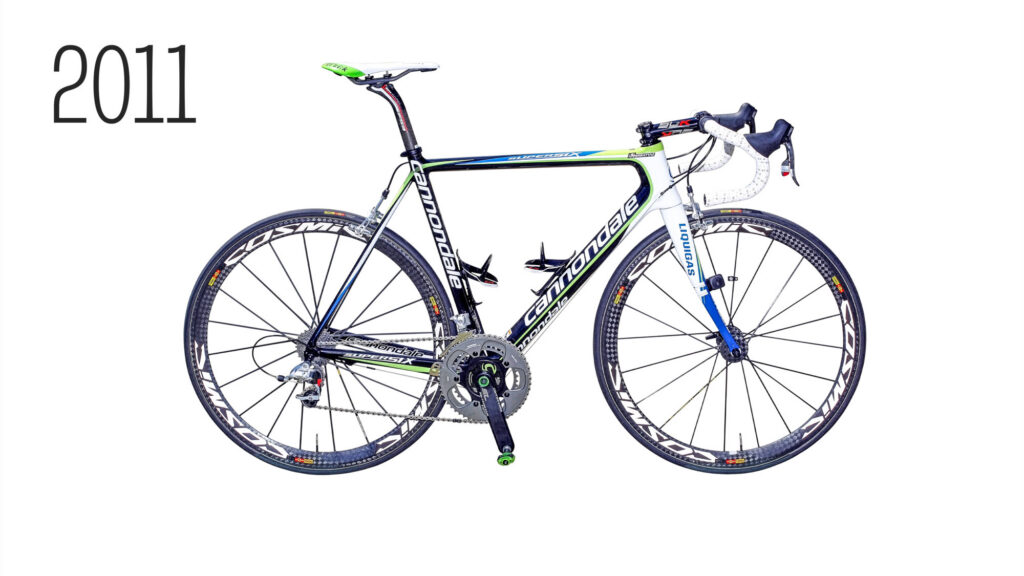
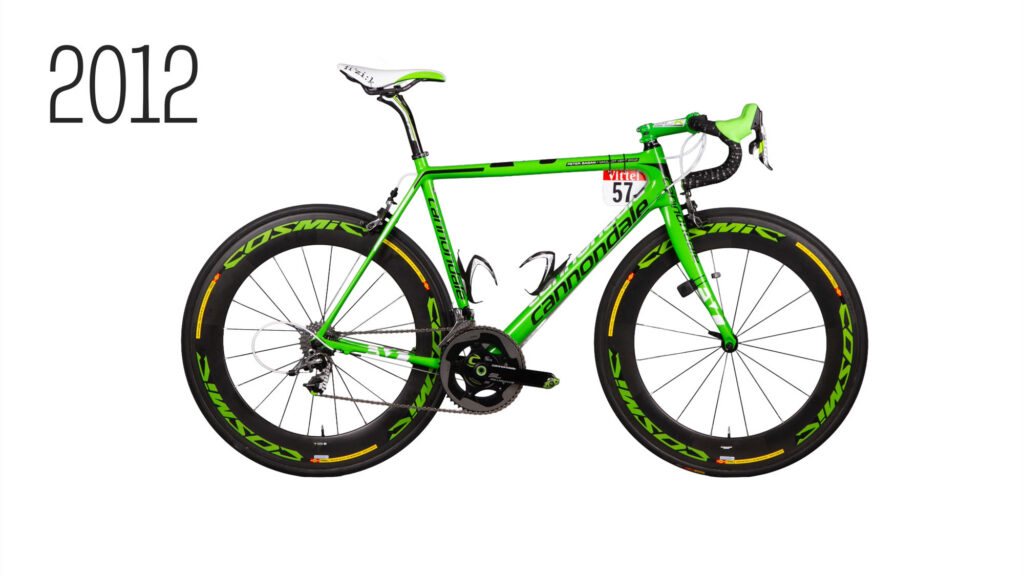
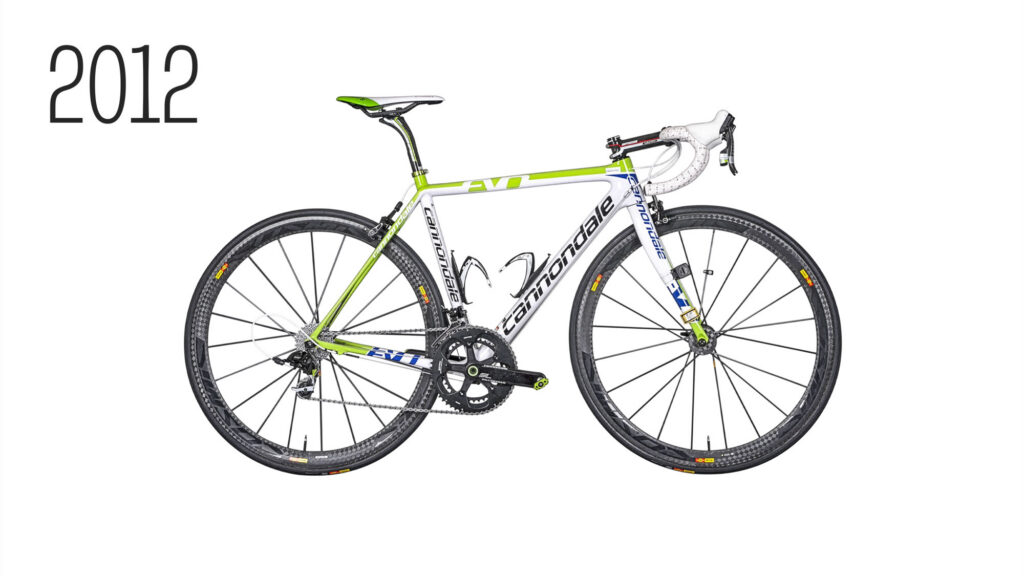
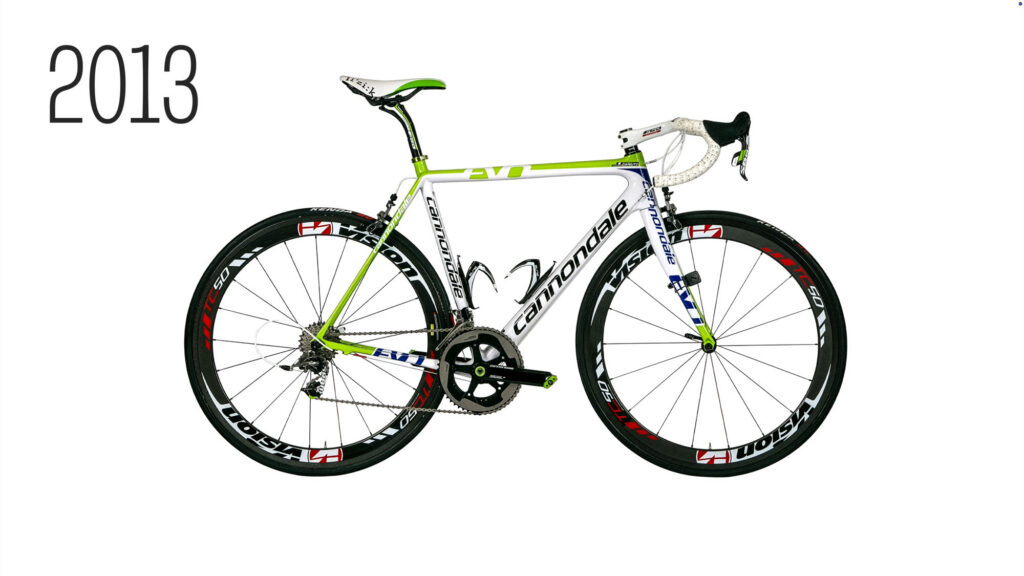
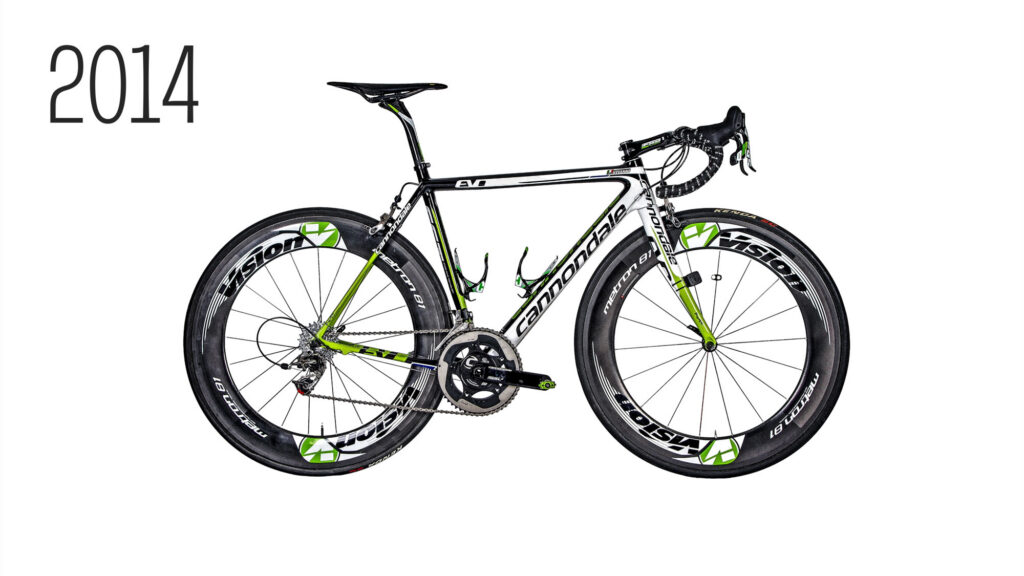
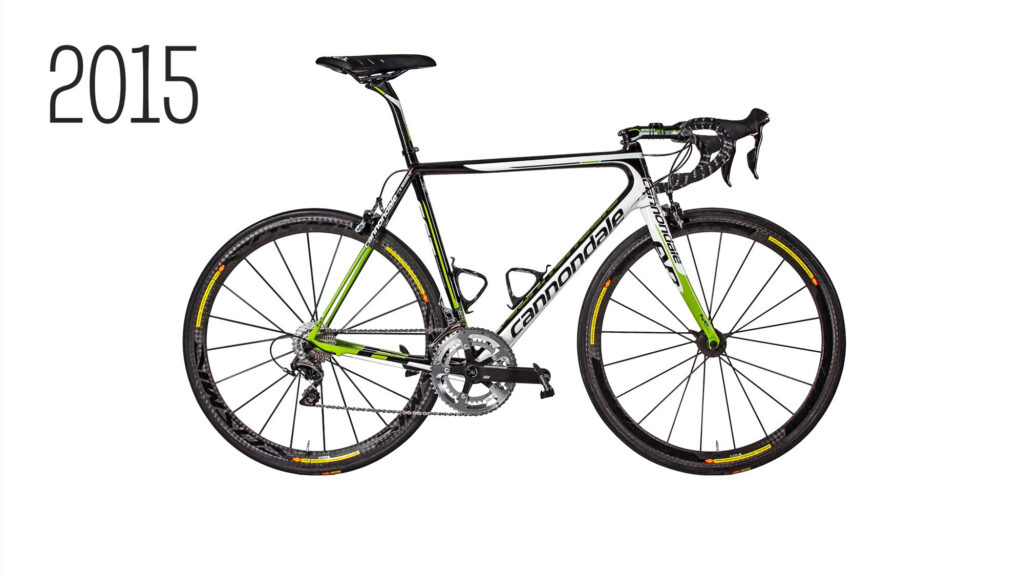
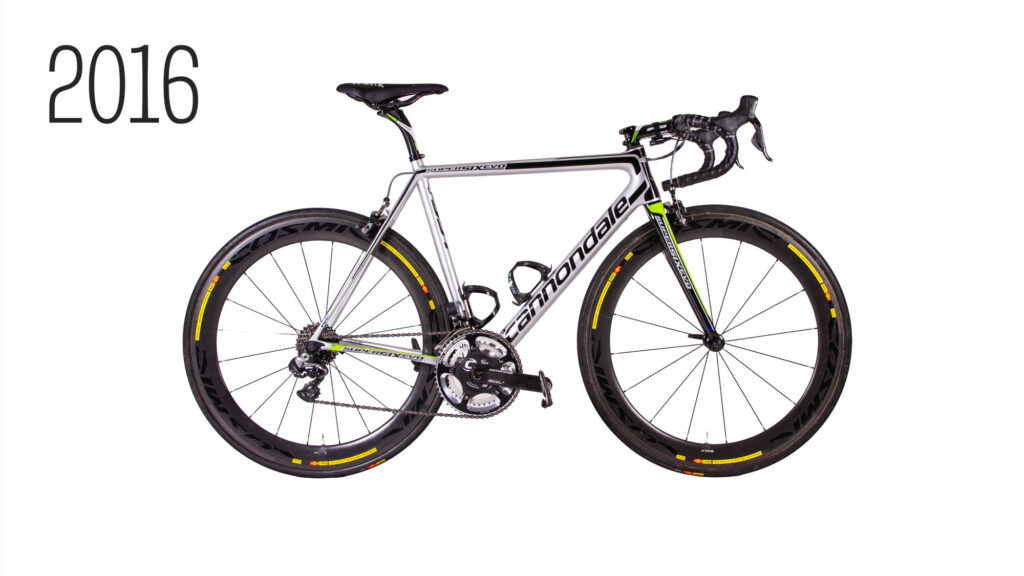
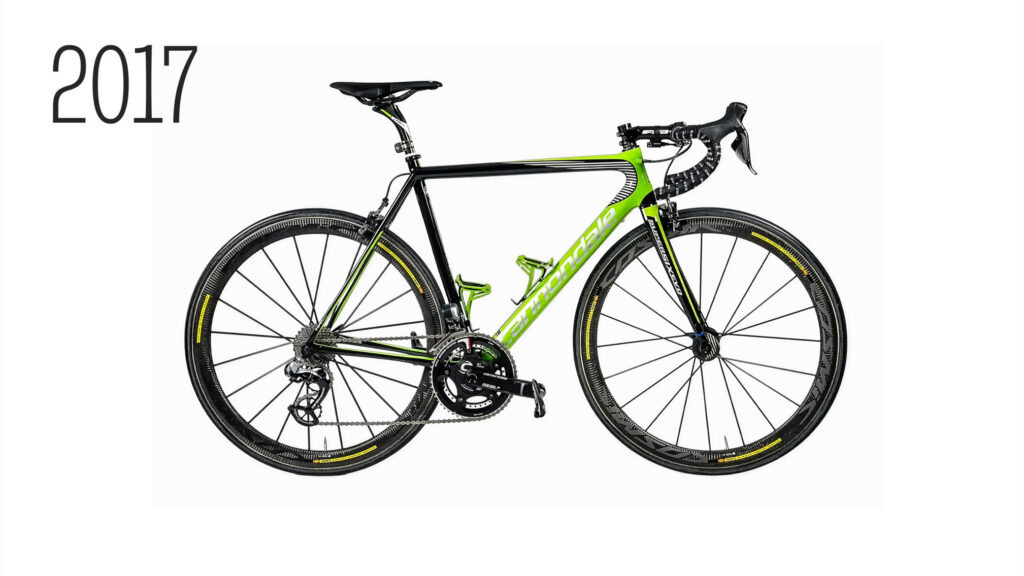
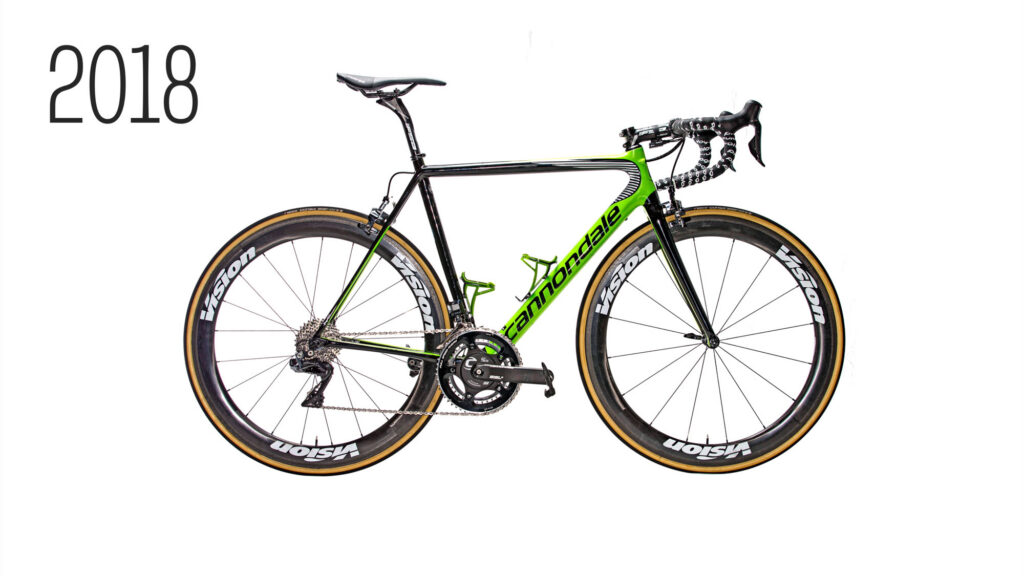
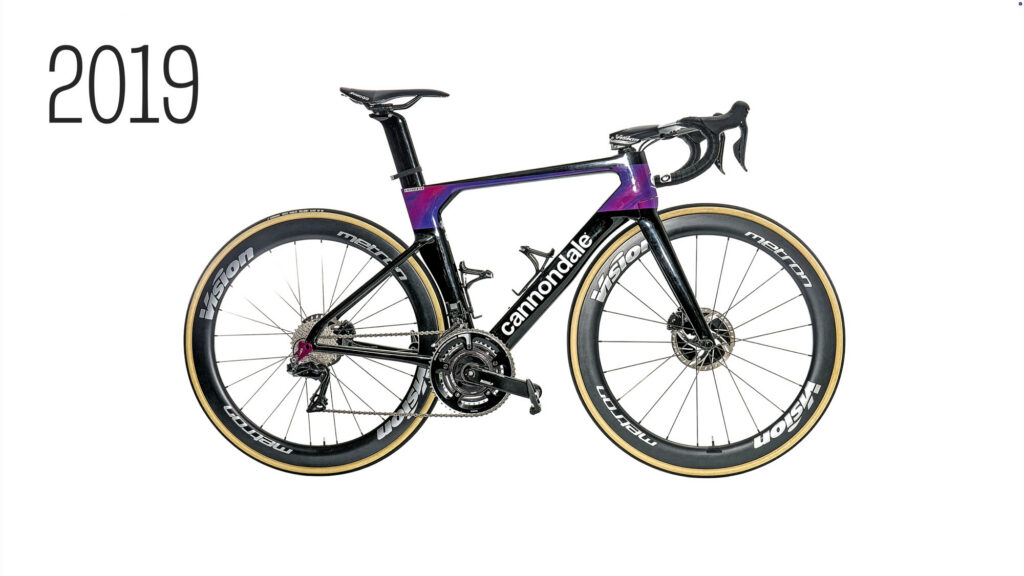
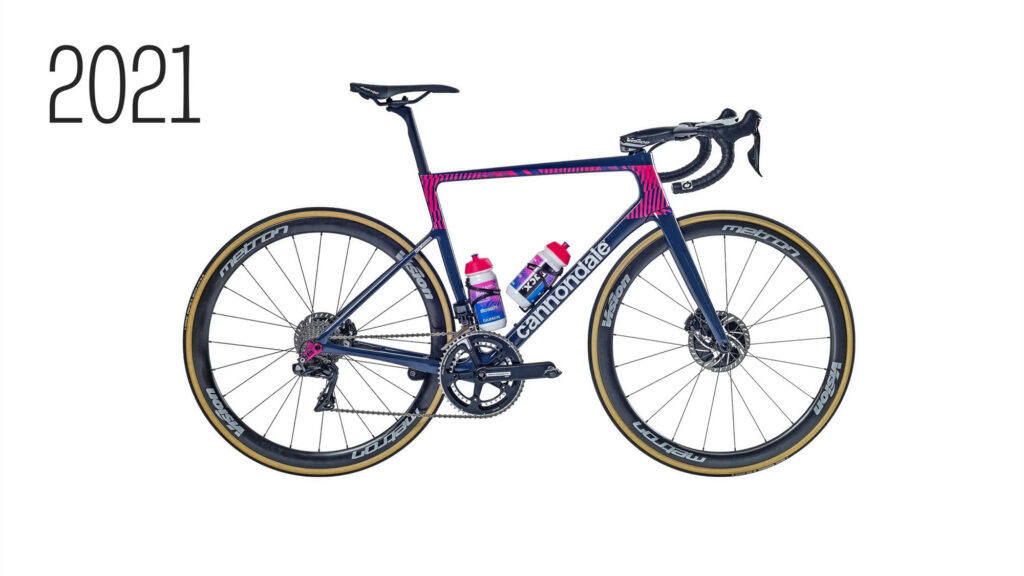
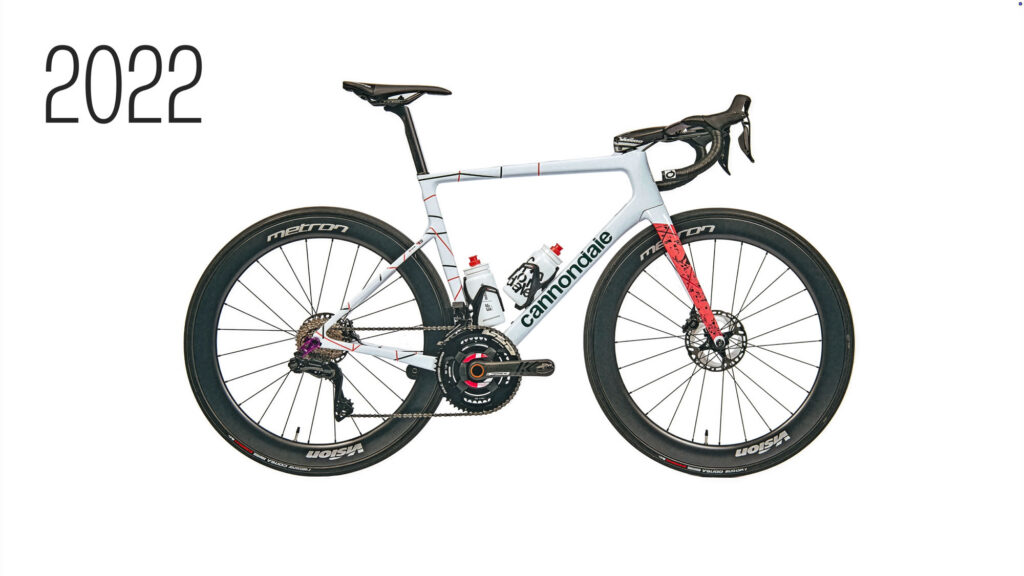
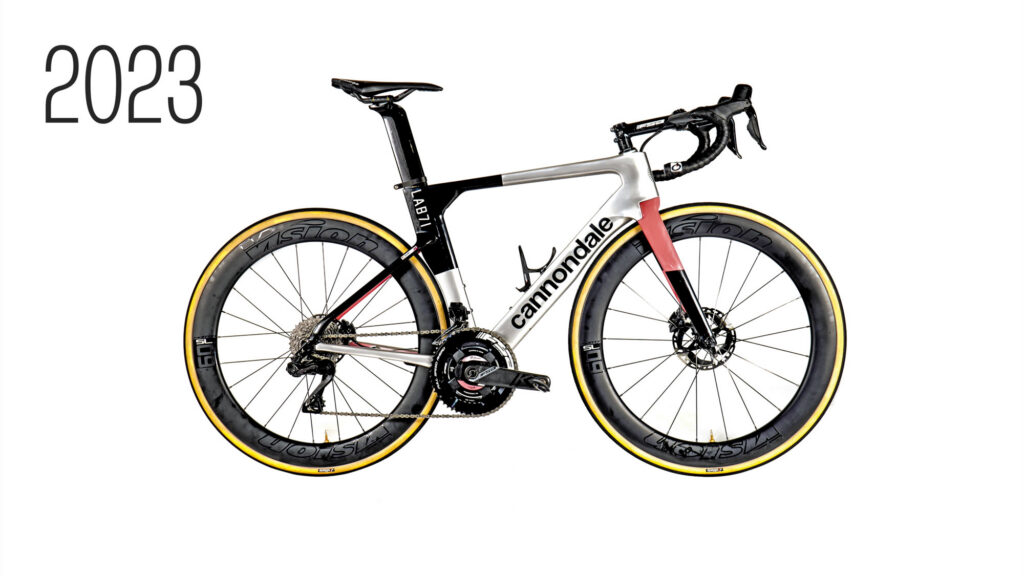
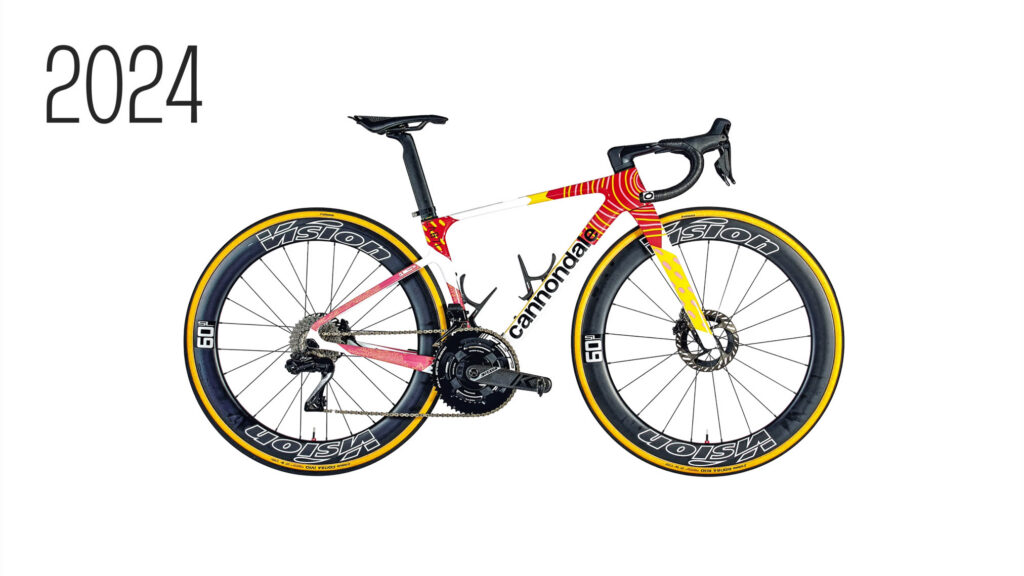
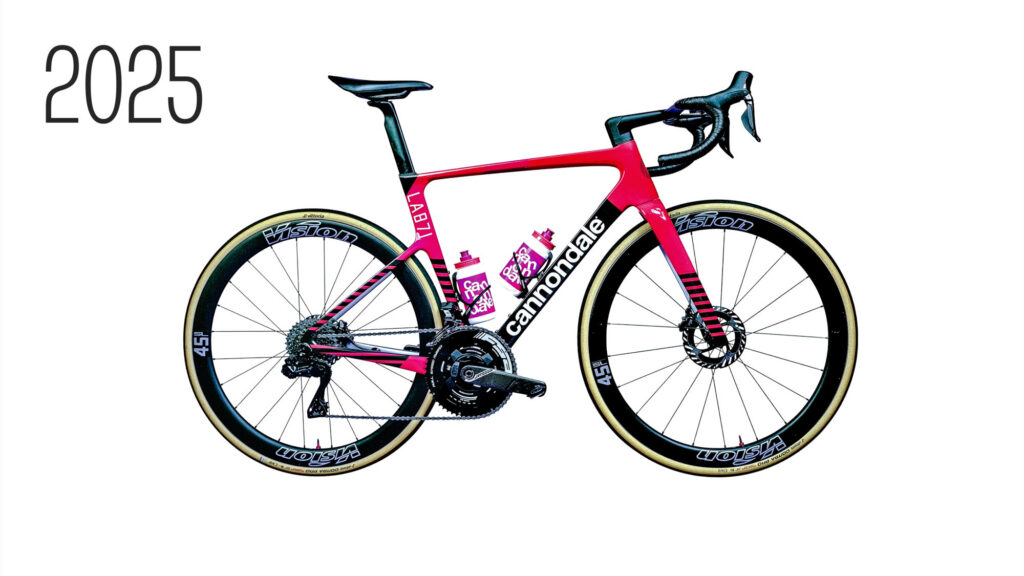
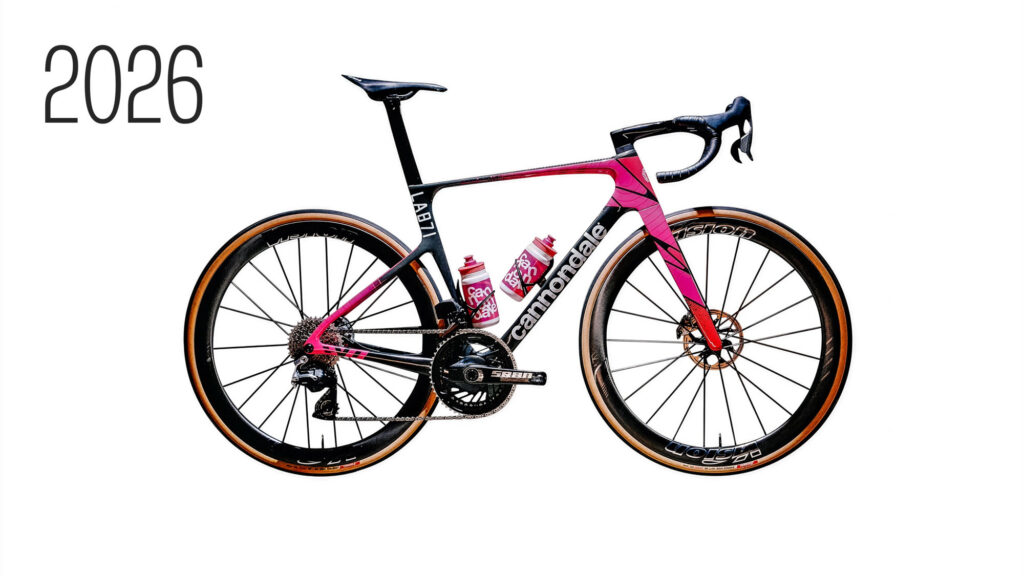
Cannondale’s road cycling sponsorships injected a little flare into the pro peloton with a new sense of American hype in what had, until the 1990s, been dominated by European brands – bikes and team sponsorships, alike. In the Tour de France of 1997 the association with Saeco provided the catalyst for the beginning of a trend that continues in 2026 – ie. matching the colour of leader’s jersey to other bits of kit (knicks, helmets, mitts, socks… etc) as well as complete bikes.
When Cipollini won the first stage of the 1997 Tour de France and took the lead of the general classification from prologue winner, Chris Boardman, the Italian sprinter – and his American bike / kit supplier – milked the opportunity for additional exposure. The so-called ‘Lion King’ turned up for the start of stage two fully clad in yellow!
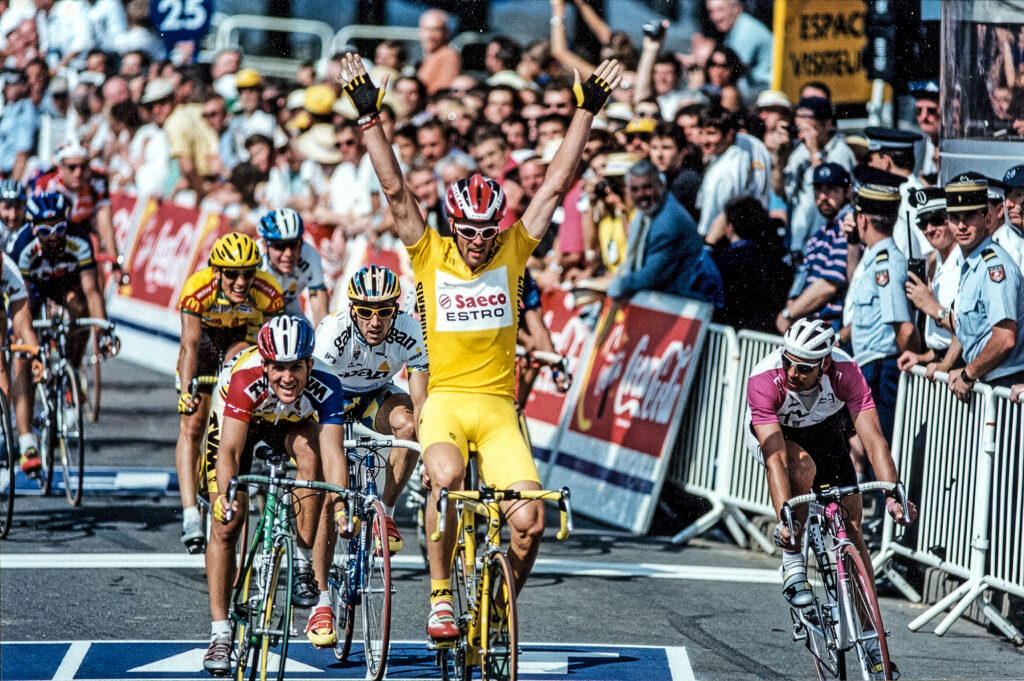
These days it has become more of the norm, but 29 years ago it was a savvy exploitation of a sponsorship made possible by Cannondale and the Saeco team’s mechanics who had built up a yellow-framed aluminium CAAD frame ready to race in stage two.
He won again. Yellow rider, yellow bike, the world’s biggest race… and Cannondale’s sponsorship achieved beyond the company’s wildest dreams. The investment during its first year in the Tour had already exceeded the kind of exposure many brands had been able achieve in years of association with a pro cycling team.
In 2002 Saeco continued with its naming-rights sponsorship but Cipollini had left the team but Cannondale was still ensured considerable exposure when the focus shifted from sprint stages to challenging for GC in the Grand Tours, with considerable success… for a few years at least.
Gilberto Simoni had become Cannondale’s new feature rider and, around the time that the Six-13 frame – with its mix of aluminium and carbon-fibre – was launched the brand was spruiking that its bikes were so light they were ‘illegal’ (ie. lighter than the minimum weight limit of 6.3kg as imposed by the UCI).
“Legalise my Cannondale” was part of the marketing campaign while the range was still predominantly made up of aluminium-framed bikes… but carbon-fibre was becoming more and more prevalent in the peloton.
It was also Cannondale that became one of the first disruptors in the peloton by issuing team riders with special kits – including the green ‘Peace’ outfit prior to the prologue of the 1998 TDF (that was actually never raced in), and the Julius Caesar kit for stage nine of the Tour in 1999 – knowing that they would be fined… but doing so nonetheless as the publicity outweighed the cost of penalties issued by the UCI.
Cannondale entered the bike market in 1983 and the US-made frames had quite an impact early, with aluminium used to make road bikes not long after the birth of BMX. It was 20-inch bikes by companies like SE Racing and the famous PK Ripper frame that pioneered the mainstream use of aluminium for frames and the road market was initially reluctant to explore the benefits of the lighter material.
With its curiously long and fat rear drop-outs and oversized tubing Cannondale was an outlier in road cycling at a time when steel dominated the market. Reynolds or Columbus were the go-to suppliers of steel for most frame builders, lugs were common… and pro riders had customised bikes built for them at the start of each season.
Instead of lugs, Cannondale welded the aluminium tubesets, initially showcasing the large, neat weld ‘beads’. Before long, the welding process also involved a second pass with the torch, to smooth out the beads and create a more attractive final product.
It was the aluminium frames that jettisoned the American brand into the mainstream, and it got a strong foothold on the triathlon scene before even considering sponsorship of a road cycling team.
In 2007, the SuperSix was launched and carbon-fibre replaced aluminium on Cannondale frames and while it’s likely that this gallery will prompt a flurry of nostalgic comments about the Six-13 frames that combined both materials, the concept didn’t linger too long. There were issues with bonding and once the carbon-fibre moulds were created for the top-end frames, production could be increased and more bikes made without the fuss of combining allow and carbon.
It was only during Cannondale’s formative years in pro cycling that alloy frames were raced. But even with the switch to carbon-fibre the company maintained the oversized tube and general aesthetic of those early bikes. The shapes would evolve and, as you can see in this series of images, the current iteration of Cannondale bikes have little resemblance to the Saeco team bikes which remain one of the more appealing products for cycling aficionados.
The ubiquitous red which many fans are nostalgic for was eventually replaced by various shades of green during the Liquigas sponsorship years, and this continued through to when Cannondale became naming-rights sponsor of the team it was associated with.
The Cannondale team eventually merged with a US-registered squad managed by Jonathan Vaughters that originally raced under the ‘Slipstream’ banner. The Cannondale-Garmin team of 2015 heralded the shift from sponsorship of Italian-registered teams.
For over 10 years Cannondale has remained loyal to Vaughters (or vice-versa) and the green colourway even lingered a little longer while various sponsors – including the Australian brand ‘Drapac’ – came and went.
Once EF Education First signed on as title sponsor green frames soon turned pink and purple and there have been variations of this theme ever since.